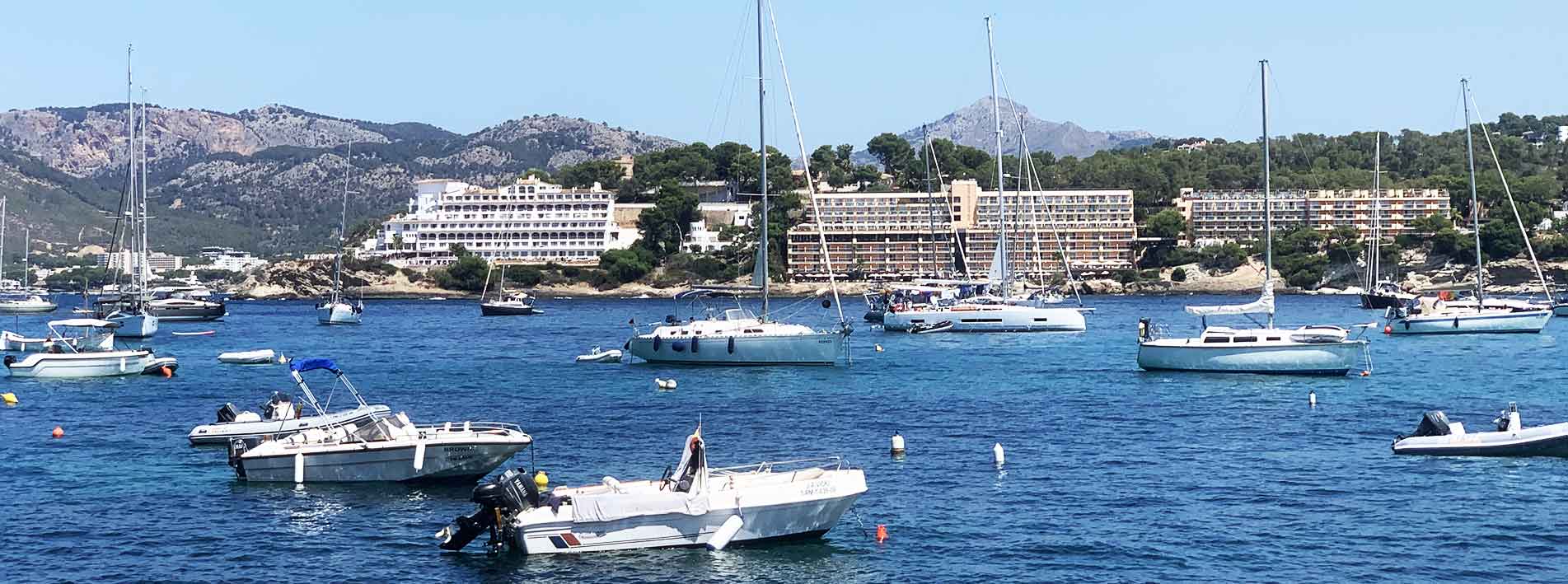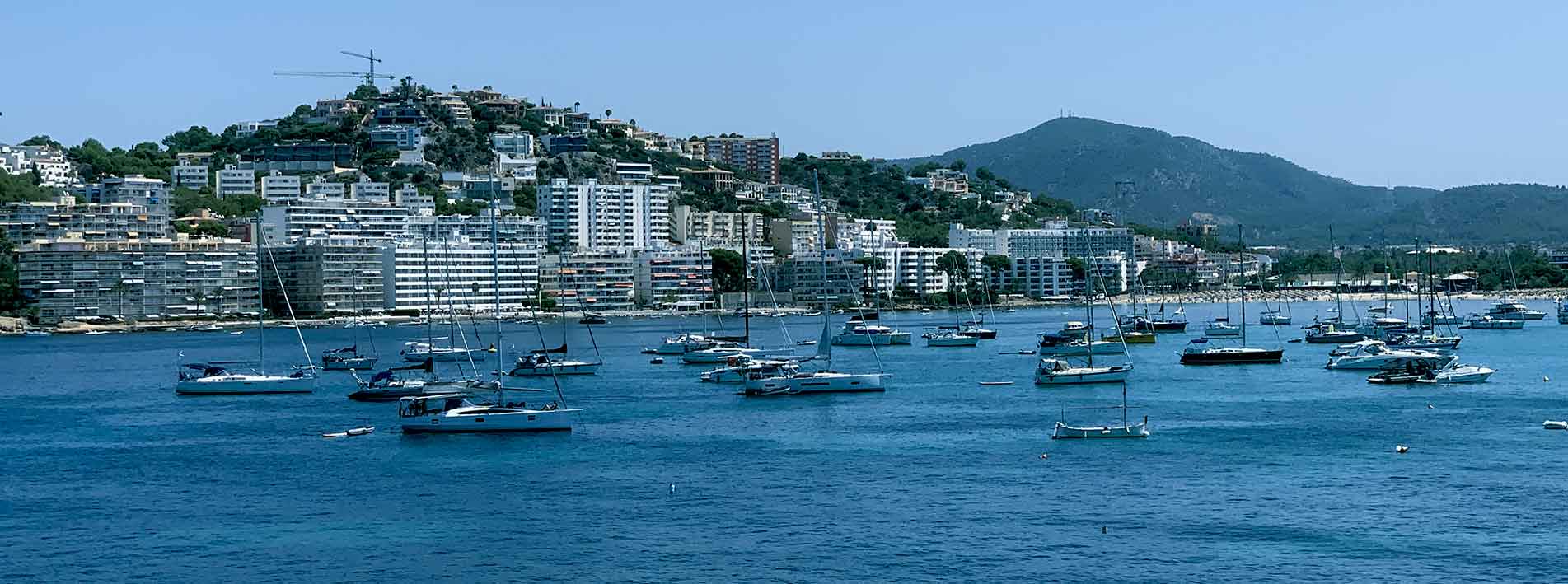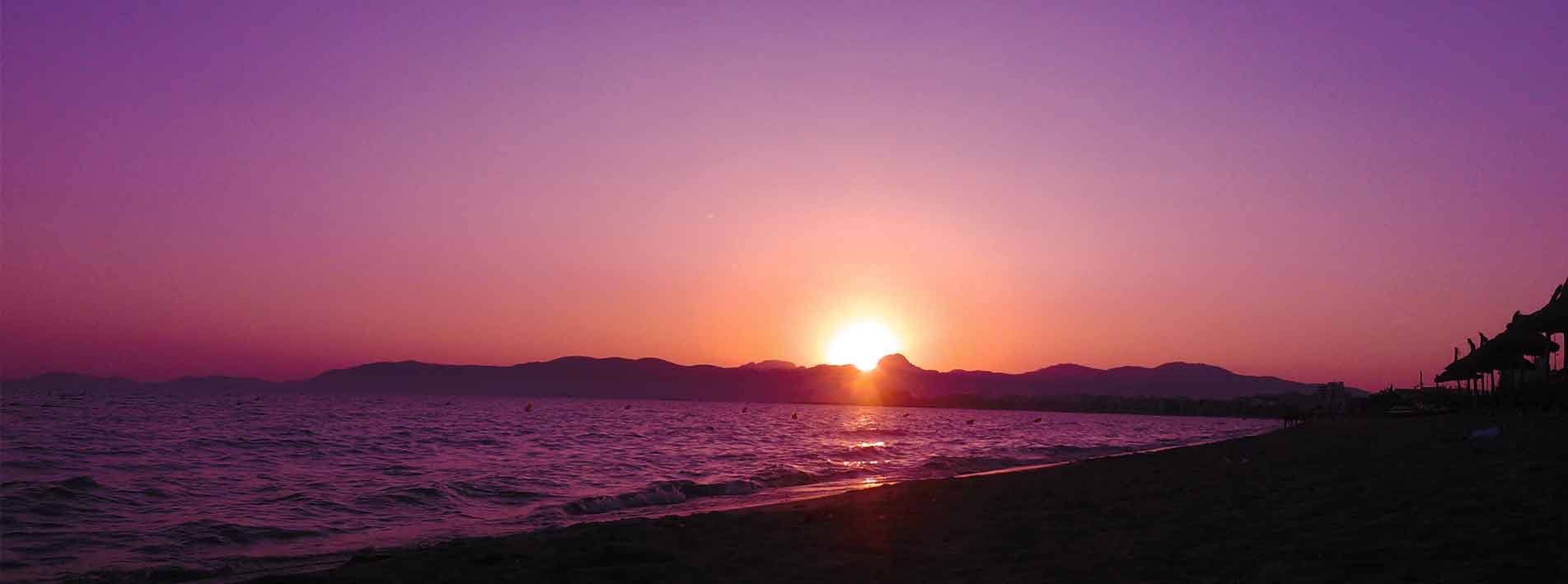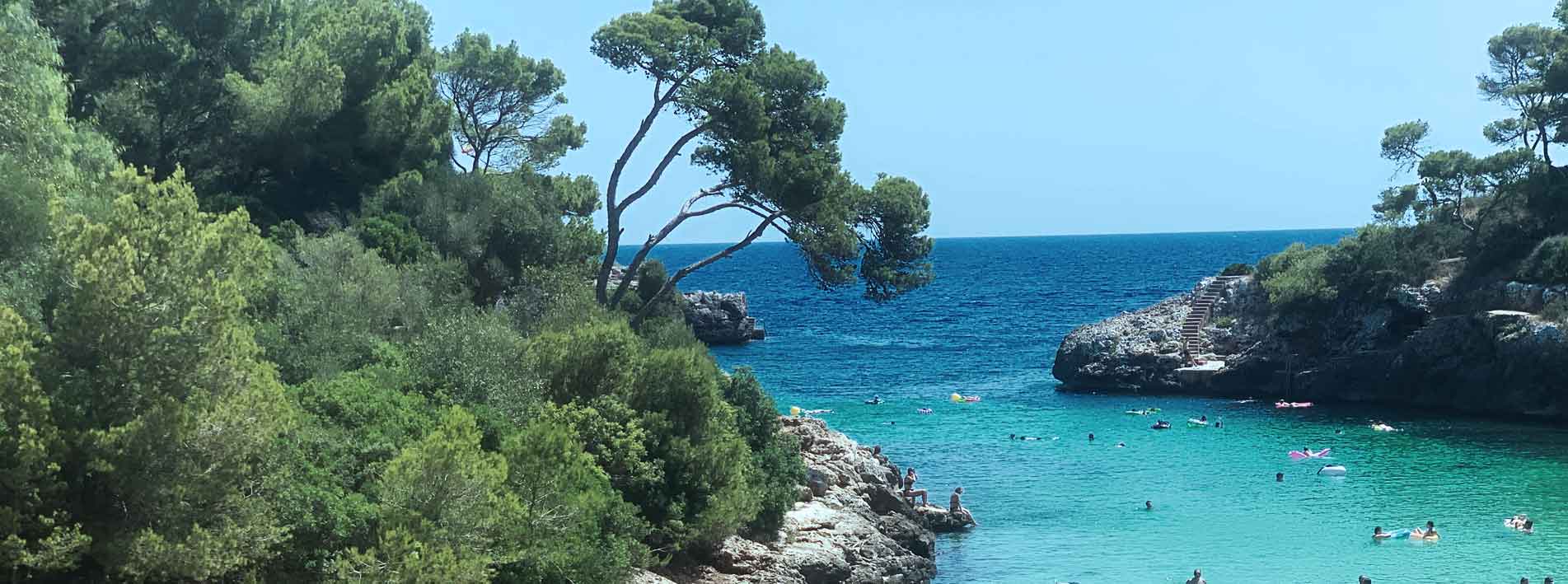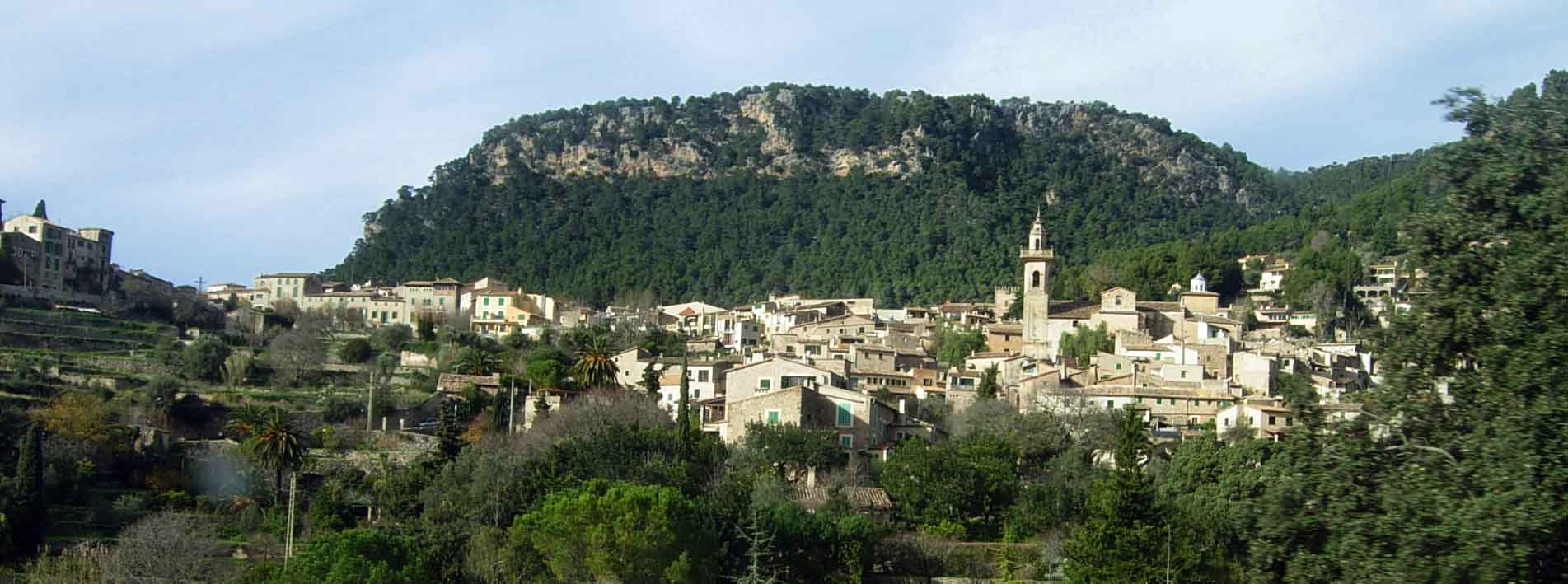

Santa Ponsa (or Santa Ponça in Catalan) is a locality in Mallorca and an important tourist and residential area in the municipality of Calvià, covering an area of 4.80 square kilometres and with approximately 11,000 inhabitants. It is located on the southwest coast of Mallorca and is famous for its sandy beach, its marina and its golf courses. In addition, Santa Ponsa has a deep historical significance as it was the place where King James I landed in 1229 to undertake the conquest of Mallorca.
Location of Santa Ponça
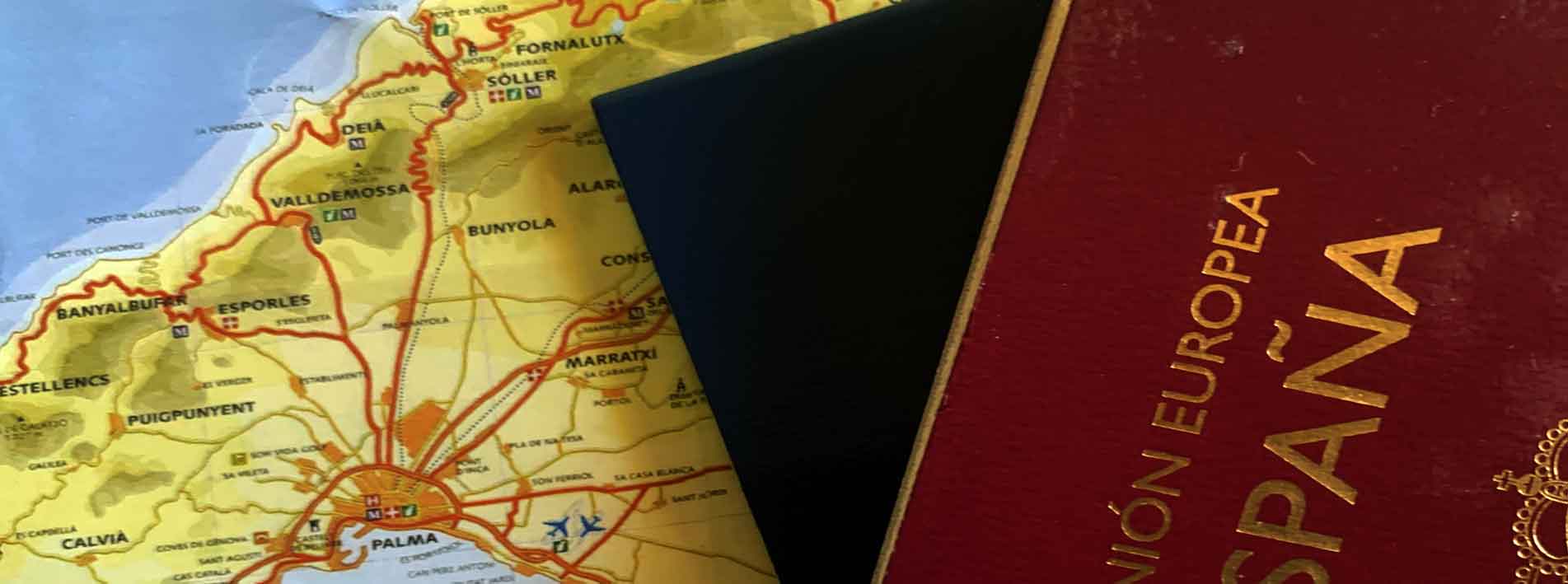
Santa Ponsa is a town located on the southwest coast of Mallorca, in the municipality of Calvià. It is about 20 kilometres from Palma, the island’s capital. Santa Ponsa is situated at coordinates 39°30′54″N 2°28′58″E and is about 30 km from the Mallorca airport, with a driving time of about 22 minutes. It is at an altitude of 27 metres above sea level. It borders other tourist resorts such as Palmanova, Magaluf and Costa de la Calma, which also belong to the municipality of Calvià.
 How to get to Santa Ponsa
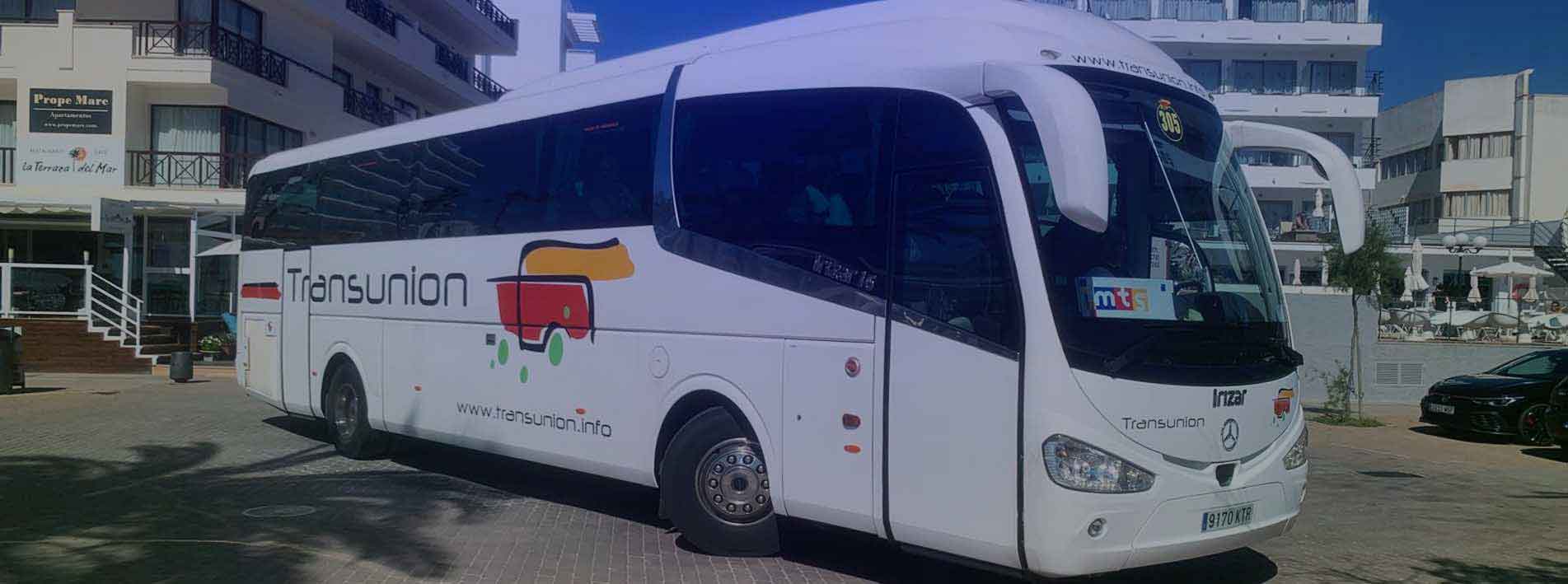
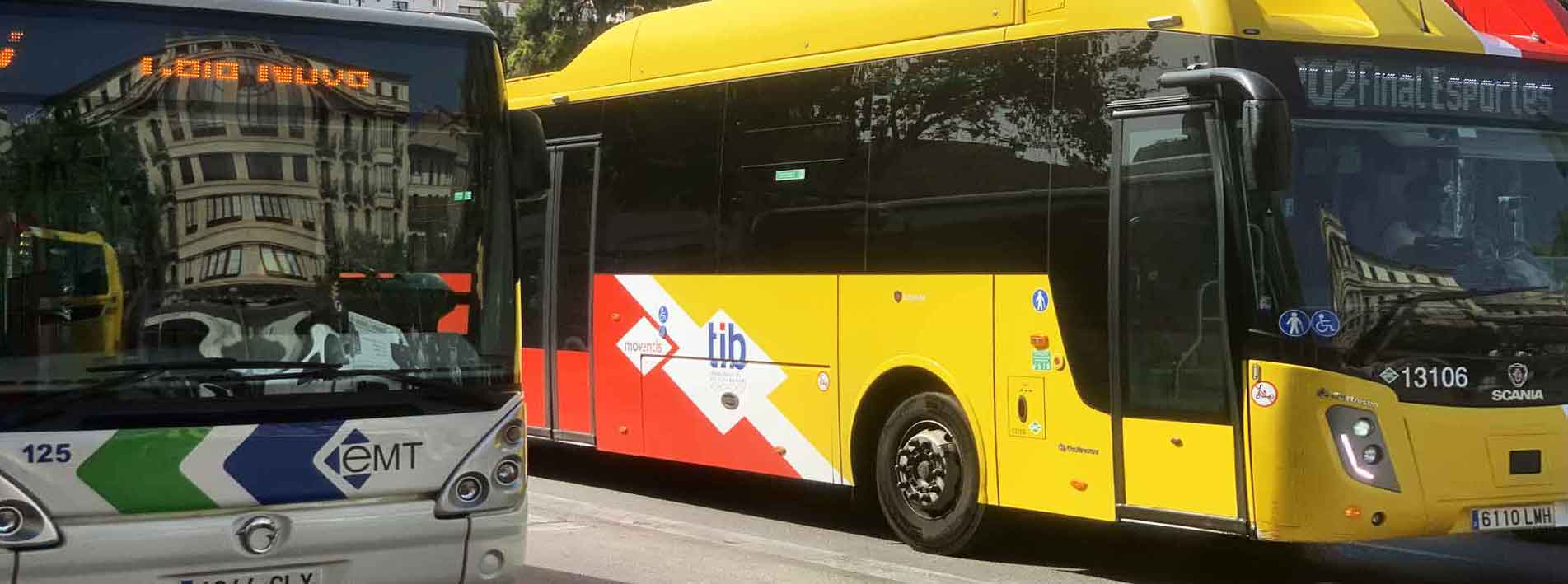
Santa Ponsa is easily accessible from Palma de Mallorca. You can get there by taxi, by car, or by bus (line 103 of the Interurban Public Transport service, which takes approximately 26 minutes).
Getting there by car
To get to Santa Ponsa by car from the north of Palma, take the Ma-1 motorway towards Andratx/Calvià. There are no intermediate exits until you reach Santa Ponsa. Look for the exit to Santa Ponsa (exit 20 or 21, depending on the specific area you are heading to). Once in Santa Ponsa, follow the local signs to reach your specific destination. Driving from Palma to Santa Ponsa on the Ma-1 highway takes about 17 minutes.
To get to Santa Ponsa by car from Palma Airport (PMI), take the Ma-20 highway and then the Ma-1 to reach Santa Ponsa. The drive from the airport takes about 30 minutes.
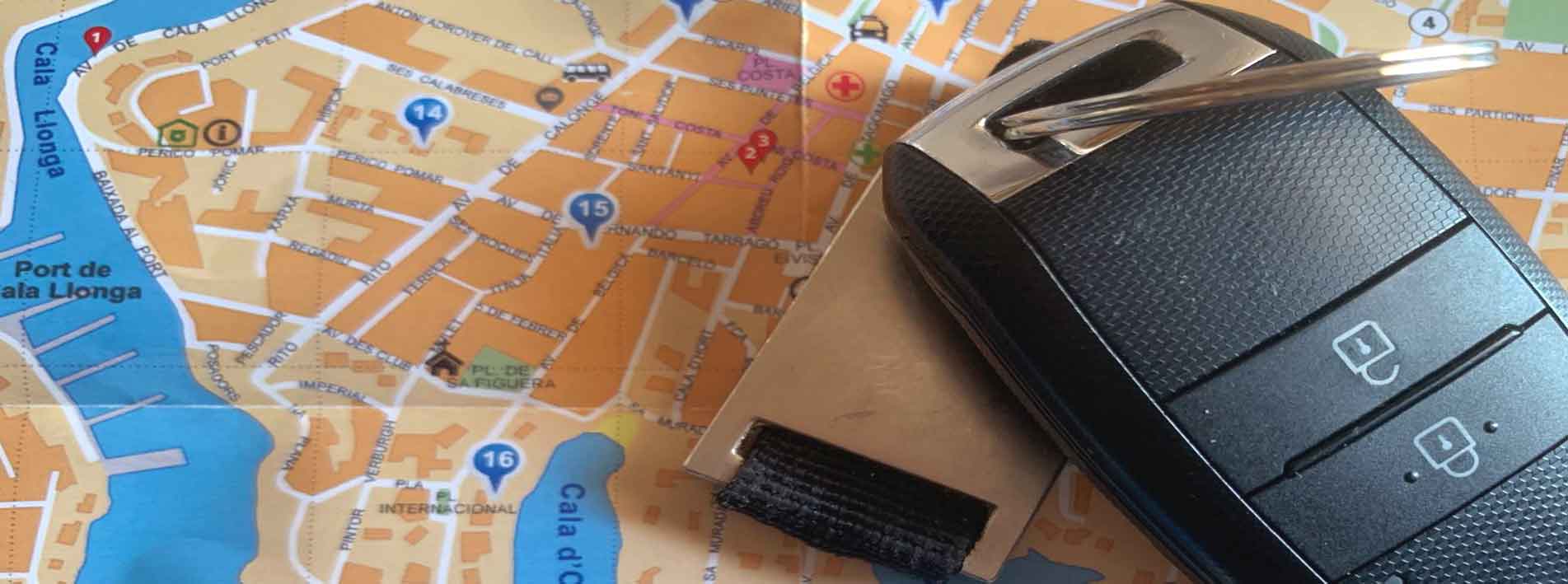
If you want to rent a car to get around the island with complete freedom and reach Santa Ponça without relying on public transport, here you can compare prices, conditions and dozens of models for renting a car in Mallorca.
 Getting there by bus
To get to Santa Ponsa by bus from Palma, line 103 is the best option, with departures from Estació Intermodal and/or Plaça Progrés in Palma to Santa Ponça Centre 1 station. The journey takes approximately 26 minutes and buses leave every 30 minutes. You can also take line 123 from Cas Català, or line A11, which connects the airport with Santa Ponça, Magaluf and Palmanova. To get to Santa Ponça from other localities in Mallorca, check lines 102 (Peguera), 106 (Nova Santa Ponça), 107 (Es Capdellà) and 122 (Port d’Andratx).
Summary: Main access routes to Santa Ponça: Line 103: connects Palma (Intermodal Station) directly with Santa Ponça, passing through Costa de la Calma and Galatzó. Line 123: connects Santa Ponça with other towns such as Cas Català, Magaluf, Palmanova, Son Caliu and Portals Nous. Line 102: connects Santa Ponça with Peguera. Line 122: connects Santa Ponça with Port d’Andratx, passing through Camp de Mar. For the most accurate information, we recommend checking the real-time schedules on the transport app or on the TIB website.
 Additional information
Parking: Parking is available near the beach and in other areas of this popular town.
Additional information: Santa Ponça is located about 19 km southwest of Palma de Mallorca, with a travel time of approximately 18 minutes by taxi or one hour by bus. The exact distance varies depending on the route and transportation used.
In relation to other towns, Santa Ponça is 35 km from El Arenal, 37 km in a straight line (and 29.3 km by road) from Estellencs and 24.3 km from Porto Pi.
Toponymy of Santa Ponsa
The toponymy of Santa Ponsa is intrinsically linked to its history as the landing place of James I and the subsequent development of the area as a commercial port. Santa Ponsa owes its name to the historical importance of its bay as the landing place of King James I in 1229, marking the beginning of the Christian reconquest of Mallorca. The name “Santa Ponsa” is believed to derive from “Santa Piscina”, referring to the shape of the bay. The original name, “Sa Caleta”, refers to the area where the Santa Ponsa Marina now stands, where a cross commemorating the landing is erected.
 Historical Context: Development and Transformation
Santa Ponsa has a rich history that combines the past with modern tourist development and its geography. Its historical importance lies in the landing of James I in 1229, an event that is celebrated annually.
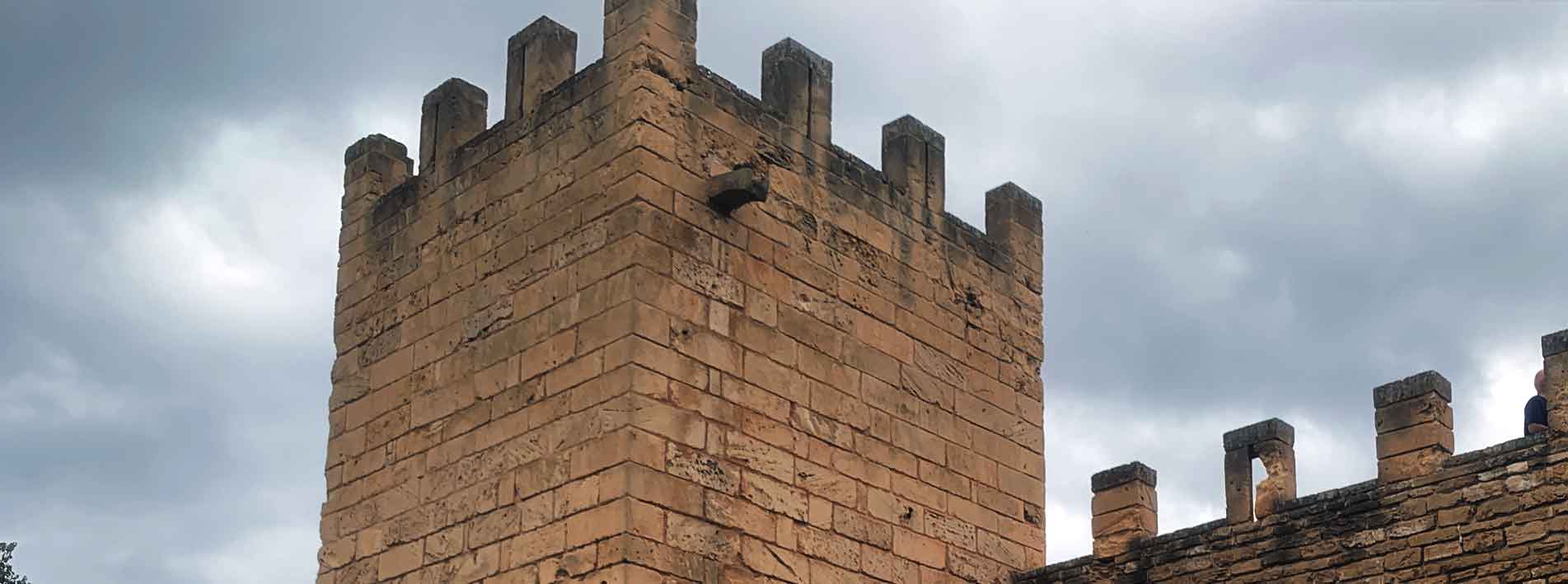
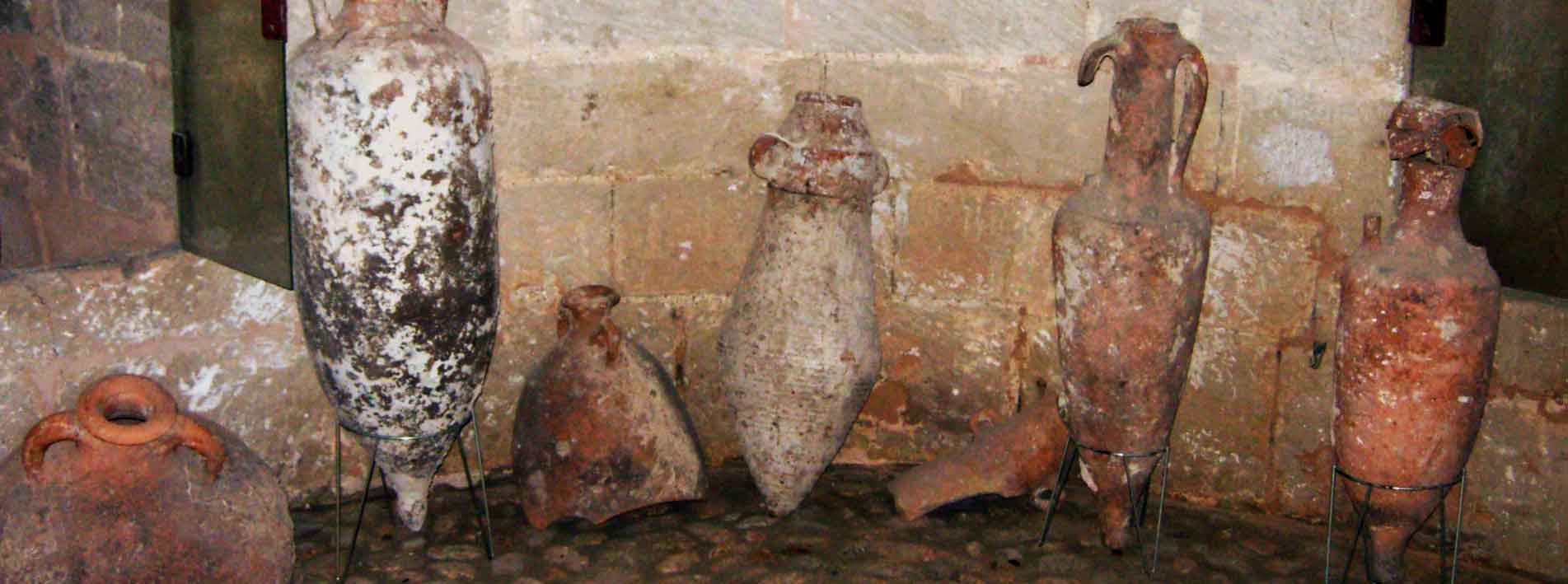
Santa Ponsa is home to vestiges of the Talayotic culture. At Puig de sa Morisca there are remains of a Talayotic settlement dating back to the Bronze Age, proving human presence since prehistoric times. Santa Ponsa is believed to have been a Roman settlement, with archaeological finds such as the site of Sa Mesquida, dating from the 1st century AD.
During the Middle Ages Santa Ponsa was an important commercial port with its own hospital. In 1229, it was the landing place of James I in his conquest of Mallorca. In the 16th century Santa Ponsa functioned as a commercial and transport port, becoming known as “Término de Santa Ponsa” before becoming part of the municipality of Calvià and eventually becoming an important residential tourist area.
The construction of the urbanisation began between 1928 and 1930, with summer houses in the garden city style. The Spanish Civil War interrupted development, which resumed in 1960, focusing on mass tourism with the massive construction of hotels and flats.
 Santa Ponsa: General Information
Santa Ponsa offers a wide range of accommodation and activities to suit all tastes. It is known for its main beach, its lively atmosphere and its diverse tourist offer that includes water sports, nightlife and shopping options.
Gastronomy in Santa Ponsa
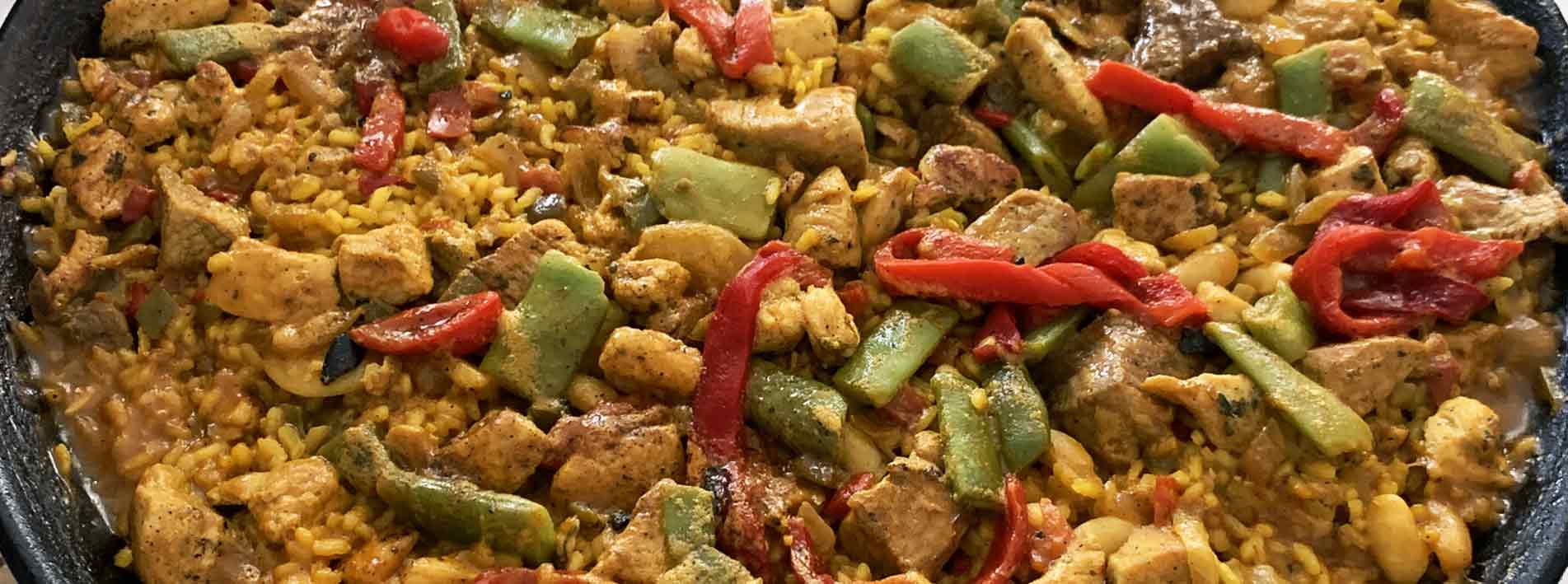
Santa Ponsa offers a wide gastronomic variety, from Mediterranean and Spanish cuisine to international options such as Italian, Asian and Argentinian, with restaurants ranging from casual to more elaborate and atmospheric beachfront options. Visitors can enjoy local dishes, fresh seafood and, of course, the famous typical Mallorcan cuisine.
In Santa Ponsa there are also many beach bars offering drinks and food all day long. In short, in this popular resort you will find everything from seafood restaurants and Italian restaurants to fast food and vegetarian options.
 Accommodation in Santa Ponsa
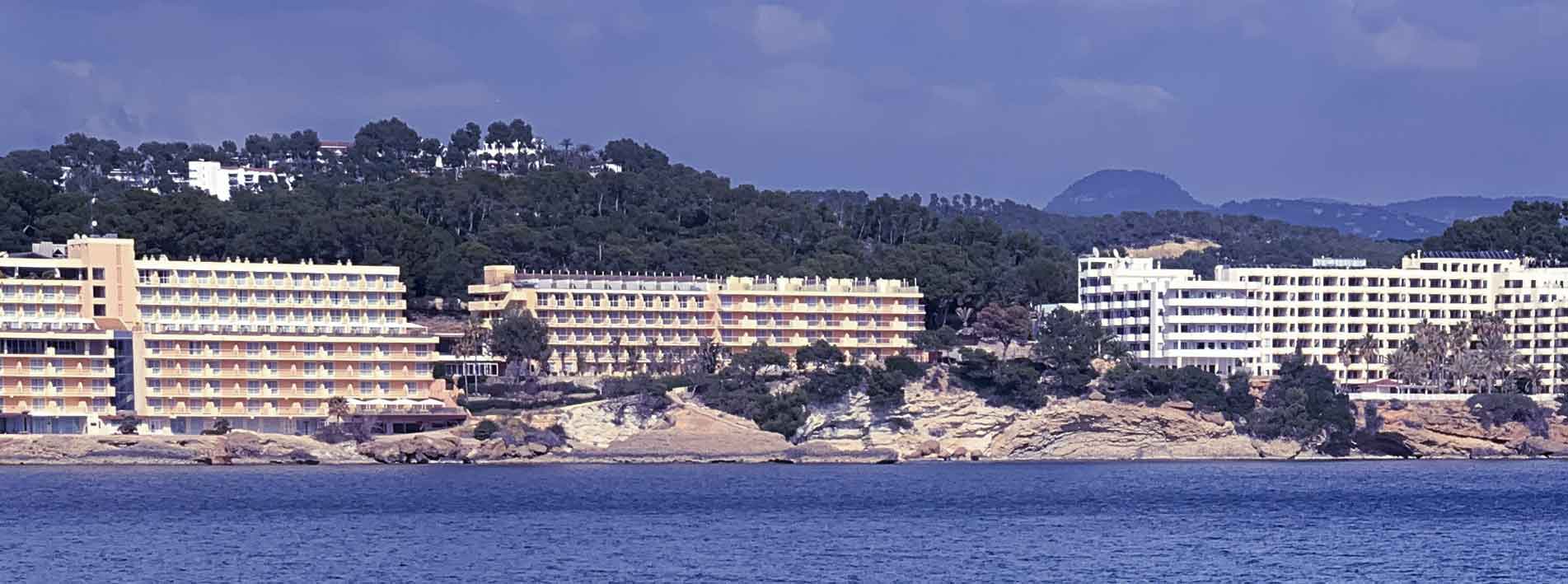
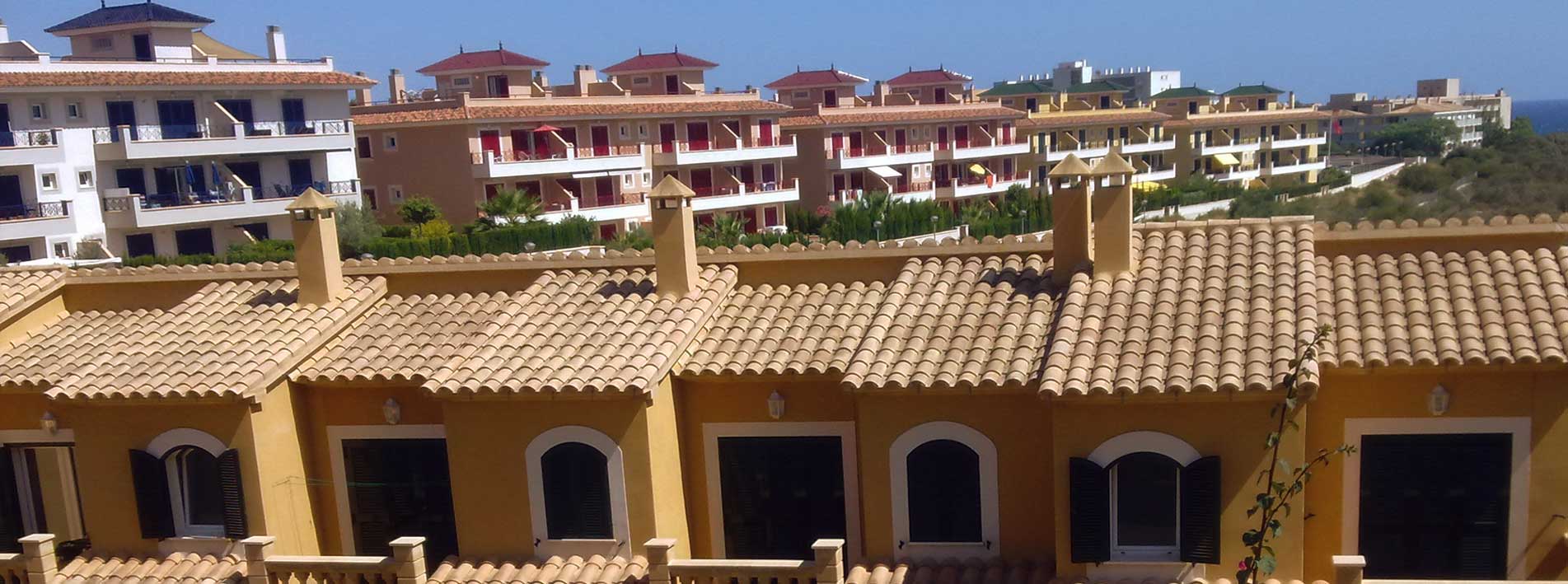
Santa Ponsa is a tourist destination that offers a wide range of accommodation and hospitality options. Here you can find everything from comfortable and sumptuous luxury hotels to all-inclusive resorts, as well as numerous flats and villas. Santa Ponsa has a robust tourist infrastructure and has a wide variety of properties and resorts to choose from, with a very high accommodation capacity in high season…
 Leisure in Santa Ponsa
Santa Ponsa offers a wide range of activities and leisure options to suit all tastes. The beaches, such as Santa Ponsa beach, are ideal for families, with shallow waters and play areas for children, as well as lifeguard services. In terms of activities, there are numerous options for sporting activities (and water sports) such as sailing, surfing, diving and jet-skiing, as well as natural areas and adventure parks such as Jungle Parc. There are also options for boat trips, such as dolphin watching cruises or catamaran rides.
In addition, Santa Ponsa has theme parks such as Marineland and Katmandu Park and is well connected to nearby attractions such as Palma Aquarium. The nightlife and restaurant scene is also attractive and there is no problem finding accommodation given the wide range of tourist facilities on offer. The annual Fiesta del Rei En Jaume is a major cultural event, with parades, a mock battle and a medieval market. This Fiesta and other local historical celebrations provide excellent opportunities to immerse yourself in the history and culture of Mallorca, enjoying the festive atmosphere and taking part in a variety of family activities.
 Nightlife in Santa Ponsa
The Santa Ponsa zone is known for its lively nightlife, with numerous bars and pubs to enjoy drinks and music. The area around Avenida Ramon de Montcada is particularly known for its bars and pubs with live music and various nightlife options.
 Weekly markets
In Santa Ponça, there are two main weekly markets: one on Saturday mornings on Avenida Riu Sill, near the health centre and a craft market on Calle Puig de Galatzó from June to October, in the afternoon. The weekly Saturday market offers a variety of products, including fresh food, clothes and flea market items, while the craft market focuses on handmade products.
Santa Ponça weekly market:
Day: Saturday mornings.
Location: Avenida Riu Sill, near the health centre.
Products: Fresh food, textiles, clothes, street market items, etc.
Timetable: Generally in the morning, until 13:00 hours.
Santa Ponça Night Craft Market
Days: From June to October, every day.
Location: Puig de Galatzó street.
Products: Local crafts.
Timetable: In the evenings, from 7pm to midnight.
In addition, on Saturdays, from 8:00 to 14:00h, in the Polígono de Son Bugadelles, 07183, Calvià there is a weekly market with a wide variety of products, including antiques, collectors’ items and flea market articles.
 Importance of golf in Santa Ponsa
To talk about Santa Ponsa and not mention the importance of golf in the region is nonsense. This Mallorcan town is known for its beautiful beaches and its hospitality offer, of course, but also for the particular treatment it gives to golf tourism. The Santa Ponsa Golf Club, with its three courses, is a reference point on the island and has hosted important tournaments on the European Tour. The Santa Ponsa I course, inaugurated in 1977, was the first in the municipality and the second in Mallorca and stands out for its length and design, with the 10th hole being one of the longest in Europe. It also has two more courses (Golf Santa Ponsa II and III) for the exclusive use of members.
In short, Santa Ponça, located in the southwest region of Mallorca, is a popular tourist destination known for its large sandy beach, water activities and family atmosphere. In addition to its coastal attractions, Santa Ponça boasts a marina, golf courses and a rich history related to the landing of King Jaime I. All these attributes and many others include Santa Ponsa in the extensive list of areas or towns in Mallorca that you should visit at least once in your life.
 Santa Ponsa in 1, 2 or 3 days
Santa Ponsa in one day focuses on the beach and the promenade: morning on the beach, lunch in the avenue area and an afternoon stroll around the marina. If you still have energy, you can head to the landing cross and the bay viewpoint.
Santa Ponsa in two days lets you add history and nature. On the second day you can visit Puig de sa Morisca or take a short trip to Palmanova or Magaluf, and in the afternoon repeat the beach or try the adventure parks in the area.
Santa Ponsa in three days gives you room to combine beach, golf and outings. One day for the beach and promenade, another for Palmanova or Portals Nous, and another for Palma or a hike in the Calvià area. It’s ideal if you’re travelling with family or as a couple and want to alternate rest and short outings.
 What to see near Santa Ponsa
Ordered from nearest to furthest, these are the easy getaways from Santa Ponsa:
Palmanova (about 10 minutes): wide beach, promenade and family-friendly atmosphere. A good option to change beaches without going far.
Magaluf (about 10-15 minutes): beach and lively atmosphere, with a nightlife area. Useful if you’re after more buzz or services.
Costa de la Calma (about 10-15 minutes): quiet coves and residential feel, ideal for a relaxed plan.
Portals Nous (about 15-20 minutes): marina with an upscale feel and a pleasant promenade.
Peguera (about 15-20 minutes): coastal area with beaches and a lively atmosphere in high season.
Calvià village (about 20 minutes): inland centre with charm and a local atmosphere, a good stop to see another pace of the island.
Palma (about 20-25 minutes): city with an old town and cathedral. Perfect for a full day.
If you want to go further, Andratx and its port are about 20-25 minutes away, and the Serra de Tramuntana offers routes and charming villages within an hour.
 Santa Ponsa without a car: what you can do on foot
Santa Ponsa is comfortable without a car if you stay near the beach or the main avenue. The tourist centre is compact and flat, and on foot you can easily cover the beach, the promenade, the restaurant area and the marina.
On foot you can also reach the landing cross area and some bay viewpoints. For Palmanova or Magaluf, the most practical option is the bus (line 123) or a long coastal walk if you like walking.
If you want to get around without a car, combine bus and walking: line 103 connects with Palma and line 123 with other centres of Calvià, with reasonable frequencies in season.
 Santa Ponsa for families
Santa Ponsa works well for families: wide beach, calm waters and flat promenade. The main beach has services and lifeguards, and the avenue area lets you stroll without traffic.
With children, these usually work well: the beach and promenade, Jungle Parc and a short trip to Palmanova or Magaluf for a change of scene. On hotter days, it’s best to keep the beach for early morning and leave visits for mid-afternoon.
If you’re looking for more peace, the Costa de la Calma area can be a good alternative base, with a more residential feel and similar services just a few minutes away.
 Curious facts and insider tips about Santa Ponsa
A destination with two names. Santa Ponsa and Santa Ponça coexist on signs, maps and websites. They’re not two different places: it’s the same town, with the Spanish and Catalan forms. If you’re looking for accommodation, try both spellings.
The bay is shaped like a pool. That’s likely where the name “Santa Piscina” comes from, one of the theories for the toponym. The sheltered shape of the bay also explains why the waters are calm for swimming.
Golf with history. The Santa Ponsa I course was the first in the municipality and the second in Mallorca, and its 10th hole is one of the longest in Europe. It’s not unusual to see groups of golfers in low season, when the destination changes pace.
Insider tip: in high season, parking near the beach fills up and avenue restaurants book up in advance. If you’re coming for lunch, book or arrive early; if you’re just strolling, early morning or sunset is best.
Another practical note: don’t confuse Santa Ponsa with Nova Santa Ponsa. They’re different areas of the same municipality, and the latter is more residential and quiet. If you want beach and atmosphere, Santa Ponsa; if you want calm, Nova Santa Ponsa.
 Frequently asked questions about Santa Ponsa
Where to park in Santa Ponsa? There is parking near the beach and in areas of the centre, but it fills up in high season. If you’re staying in the centre, the easiest thing is to walk and use the car only for outings.
Is it better to stay in Santa Ponsa or in Palmanova? Santa Ponsa has more atmosphere and services, and tends to be livelier; Palmanova is more family-friendly with a wide beach. The choice depends on whether you prioritise buzz or quiet.
Is there a party scene in Santa Ponsa? It has a lively atmosphere, especially on Avenida Ramon de Montcada, but it’s not an intense party destination like Magaluf. It’s more about terraces, dinners and live music than mass clubs.
When is the best time to go to Santa Ponsa? From May to October there are full services and good weather. July and August are the busiest months; May, June and September usually offer the best combination of good weather and fewer people.
Do you need a car to visit Santa Ponsa? For the beach and promenade, no. For Palmanova, Magaluf, Peguera or Palma, it is recommended, although you can also combine bus and taxi for short outings.
Can you drink tap water in Mallorca? In general, the mains water is potable, although the taste may vary. Many visitors choose bottled water for drinking, but for cooking and washing it is suitable.
By the way, are you coming to Mallorca on a tourism trip? If you find it helpful, you can also consult our travel guide to Mallorca and more tourist information about the island.