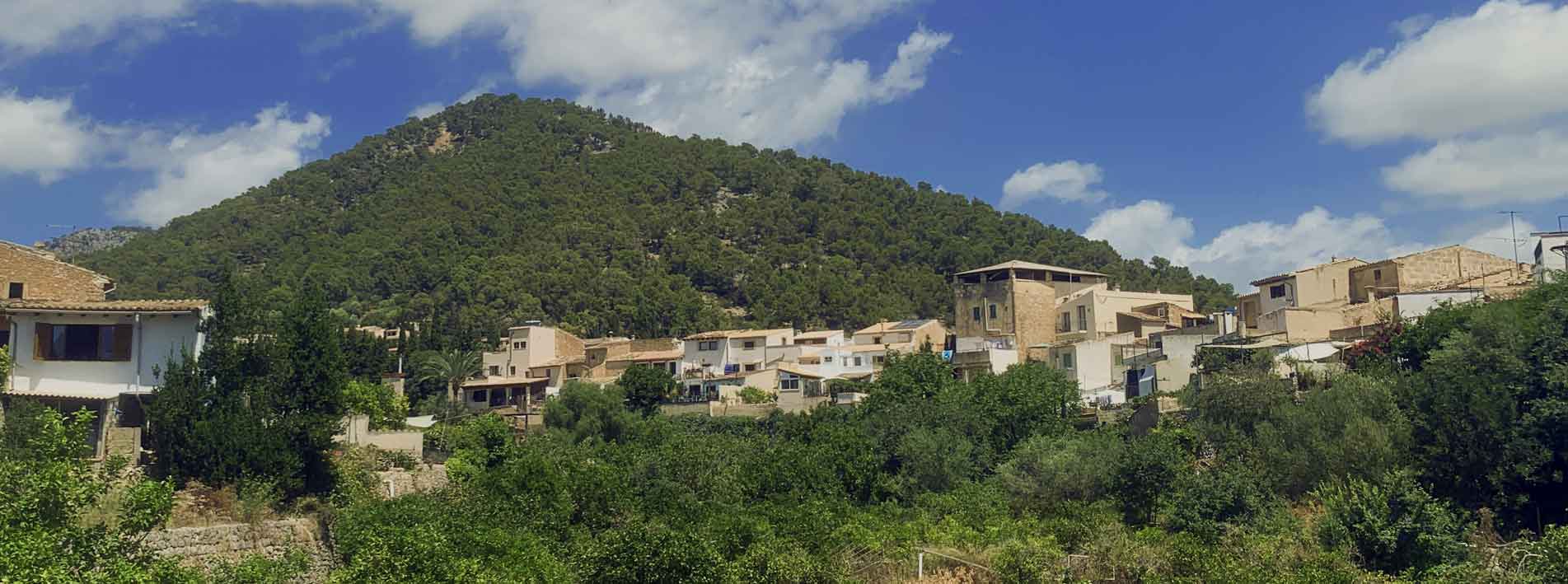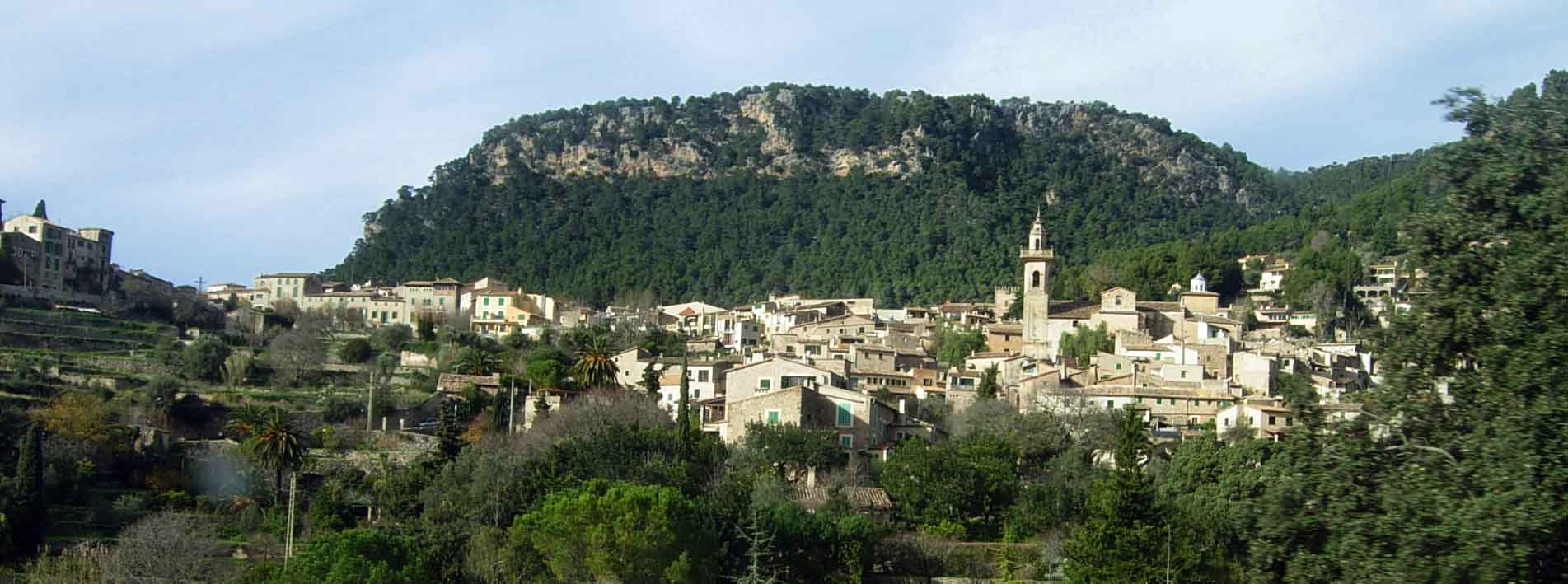

Alarò is a locality and a beautiful town of Mallorca, Balearic Islands. Belonging to the region of Es Raiguer, it is located in the western part of the island, right on a hillside of the Serra de Tramuntana. Alarò borders the municipalities of Consell, Binissalem, Lloseta, Mancor del Vall, Escorca, Bunyola and Santa María del Camí.
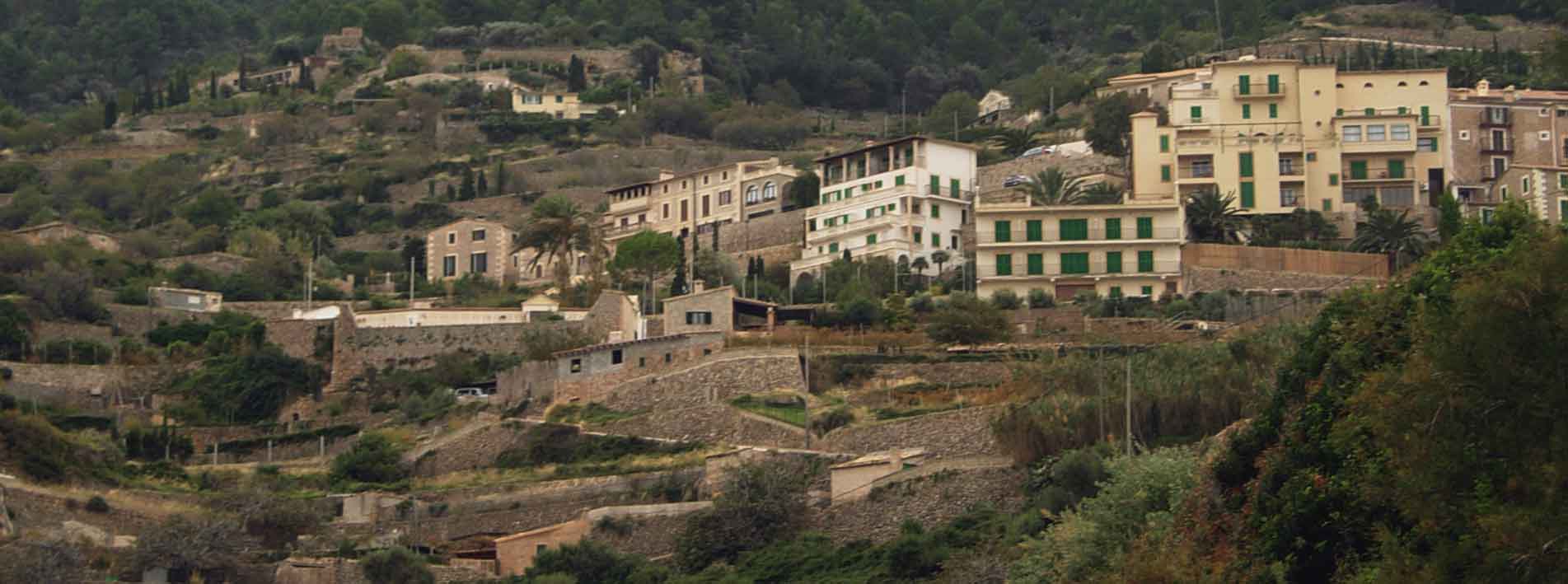
Alarò is a quiet and traditional Mallorcan village covering 4572 km². It is nestled in a peaceful valley in the mountains east of the Serra de Tramuntana. Most of its streets are lined with classic stone structures, very typical of villages settled in the mountains, making it an almost magical place to visit.
Otherwise, the village of Alarò is quiet and peaceful. Alarò is one of the few Towns in Mallorca that does not have large hotel complexes and an inflated tourist infrastructure. It is an inland village, nestled in the foothills of the Serra de Tramuntana mountains, with just over 6,000 inhabitants.
 How to get to Alarò?
The village of Alarò is located 26.2 km from the center of Palma de Mallorca, the capital of the Balearic Islands. Three ways to travel from Palma de Mallorca to Alarò:
Getting to Alarò by train
Journey time: 1 hour 2 minutes
Route: From Intermodal Station, Palma de Mallorca (T3 towards Manacor) by train to Alarò/Consell Station. Then transfer to bus (line 342) to Alarò (stop 1001).
Cost of the journey: €4–7 (approx.)
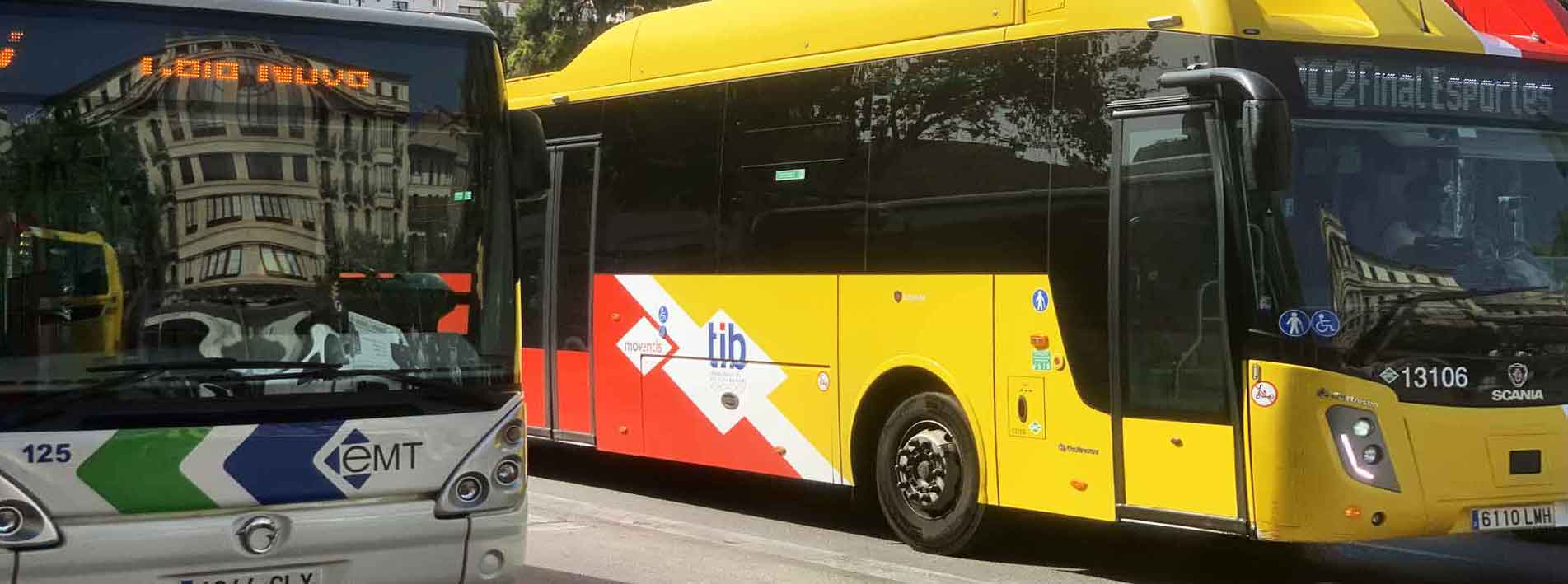
Detailed train + bus route: Choose a train station in Mallorca and take a train to the station closest to Alaró (Alarò/Consell Station is a good starting point). Once at the station, just outside, look for the bus 342 stop, which connects Polígon de Consell directly with Alaró. The bus ride takes approximately 10 minutes and line 342 operates daily from 6:20 a.m. to 9:58 p.m. For the most accurate, real-time timetables, we recommend checking the official TIB website.
Getting to Alarò by taxi
Journey time: 21 min
Cost of the journey: €35–45 (approx.)
From Palma airport: a taxi from Palma airport to Alaró takes approximately 30-40 minutes and costs between €40 and €50, depending on the point of origin and the time of day. The time and price may vary depending on the route, time and taxi company, as there may be a slight increase due to the meter or supplements, so it is always recommended to check directly with the provider beforehand.
 Getting to Alarò by car: 26.2 km
Journey time: 21 min
Cost of the journey: €5–7 (approx. fuel cost)
To get to Alaró by car from Palma: Take the Ma-13 motorway towards Alcudia. At Consell, take the exit to join the Ma-2022 road. Follow the Ma-2022 until you reach Alaró. The journey takes approximately 30 minutes.
To get to Alaró by car from the airport: Take the Ma-13 highway towards Alcudia. At Consell, take the exit to join the Ma-2022 road. Continue on the Ma-2022 until you reach Alaró. The journey takes approximately 30 minutes.
To get to Alaró by car from the south: Take the Ma-1 or Ma-13 motorway to the exit for Alaró.
Access to the village: You can park your car in the public car parks in the village. The village center is small and can be easily explored on foot.
Access to Alaró Castle: Alaró is famous for its castle, Castillo de Alaró, which can be reached by car to a nearby point and then continued on foot. The route by car will take you through the interior of the island to the base of the castle. On foot: the hiking trail to the castle is the most common and popular way to access it. By car (exceptions only): access by car is restricted for most visitors. In cases of reduced mobility, special permits can be arranged, but the car must be left parked outside the castle. Route: once you arrive in Alaró, look for and follow the signs indicating the direction to climb up to the castle. You can drive to a parking lot located halfway up the mountain, near the Es Verger restaurant. From the parking lot, the path to the castle is on foot and well signposted.
Purchasing your ticket (public transport): You can buy your ticket directly from the driver on board the bus, but it is important to note that only cash bills up to €10 are accepted. Another option is to purchase a prepaid card in advance at authorized points of sale. Payment can also be made directly with a contactless bank card and up to five people can travel with the same card, benefiting from discounts per user. In this case, it is essential to validate the card both when boarding and alighting from the bus so that the system can calculate the cost of the journey correctly.
 Climate in Alarò
The climate in Alaró, as in the rest of the island of Mallorca, is typically Mediterranean. It is characterized by seasonal rainfall. Around 40% of rainfall occurs in autumn, with an average of 800 mm per square meter per year at lower latitudes and 600 mm at higher latitudes. The temperatures in the municipality are typical of a temperate climate. Winters are mild and summers are hot and humid. The average annual temperature is around 15ºC, with minimum temperatures averaging 30ºC in summer and 6ºC in winter.
Geography of Alarò
“The municipality of Alarò is located in the southern foothills of the Serra de Tramuntana mountains. The municipalities that live and cling to the foot of this mountain range belong to the Raiguer region.”
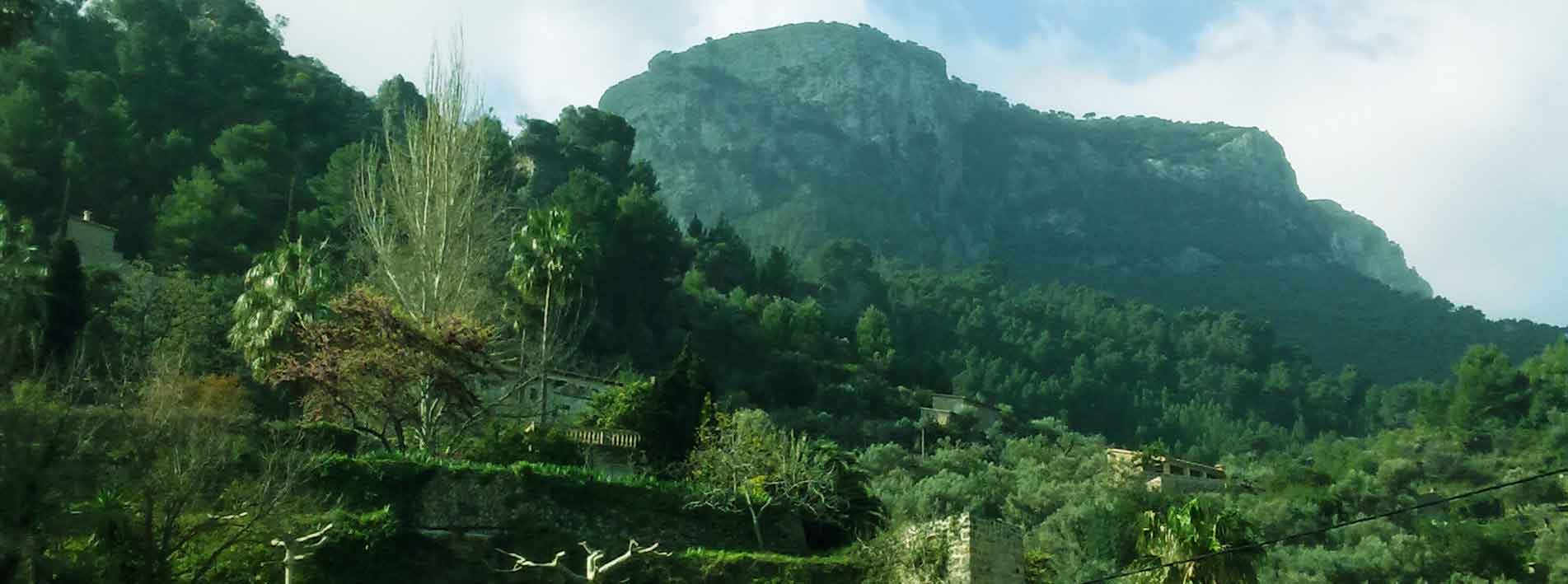
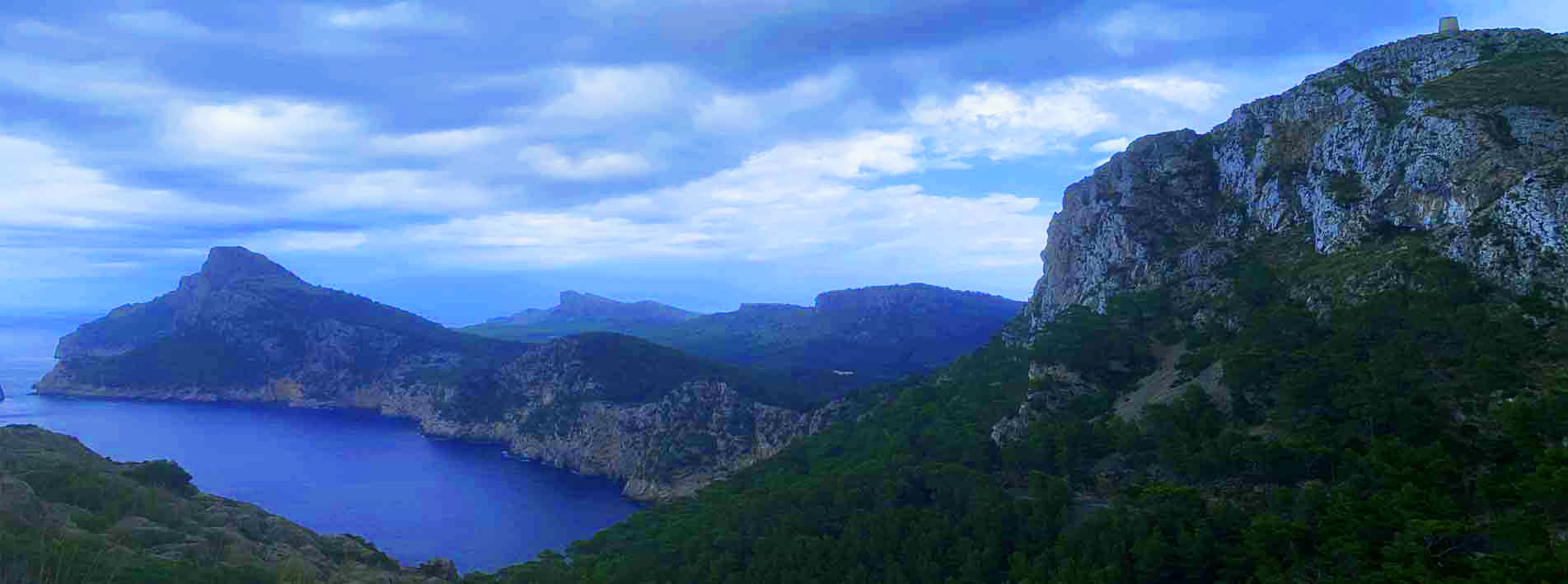
There are several peaks in this municipality; the highest is Puig de Sa Font Fresca, which rises to 836 meters above sea level, but Puig d’Alarò (822 m altitude) and Puig de s’Alcadena (815 m above sea level) are the most striking elevations in this beautiful landscape. Both peaks are almost identical (and almost inaccessible due to their high rocky walls) and flank the territory through which the torrent (torrent) of Solleric flows.
 Brief history of Alarò
The earliest traces of settlement in the municipality of Alarò can be found in the constructions of the Talayotic culture, corresponding to the Iron Age in Mallorca. The Talayotic period lasted until the Roman conquest of the island of Mallorca in 123 BC.
Apart from some late Roman defensive remains found in the region, there are no other elements that refer to the invasion and subsequent settlement of the Vandals in the centuries following the fall of the Roman Empire. It has been confirmed that later, during Islamic rule (13th century), the village of Alarò was part of the farmstead of Oloron (as documented in the Llibre del Repartiment and the Crónica del Rey Jaime I, as Oloro).
This village in Mallorca achieved notable fame, above all, due to the homonymous Castell d’Alarò (now in ruins). The legendary fortress (located 824 meters above sea level) is one of the three roquers castles in Mallorca and has been at the center of the known history of this municipality since the dawn of the Muslim invasion and subsequent domination of the Balearic Islands in 902-903.
During this period, there was already a type of fortification on the site occupied by the current castle. The inhabitants of the island resisted for eight years and six months in the then fortification of Hisn Alarum until their supplies ran out and they fell into the hands of the Muslim invaders. Later, in 1343, when the Privative Kingdom of Mallorca came to an end, it was in this same castle that the supporters of the Mallorcan king Jaime III surrendered to the Aragonese monarch, but not before putting up epic resistance.
 Culture and traditions in Alarò
The village has a rich and deep-rooted culture that has been woven together with the unfolding of its exciting history.
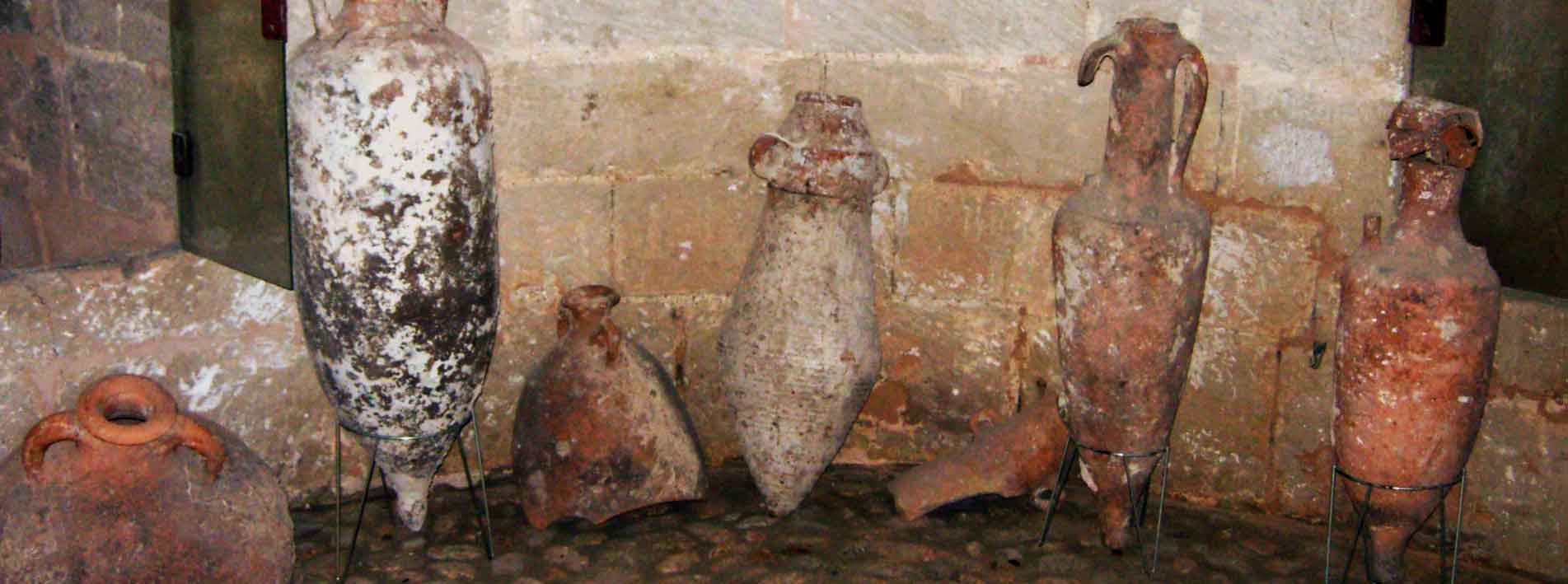
Archaeology: Several fossil sites from the Talayotic period have been discovered in Alarò, in varying states of preservation. Although these archaeological monuments are located on private property, they have been declared Assets of Cultural Interest (BIC) and can be visited with the corresponding prior permission.
The archaeological sites listed below have been designated BIC (Assets of Cultural Interest) since 1966: S’Alcadena or es Claper des Gegant, an oval mountain talayot, approximately 8 m in diameter and almost 3 m high. Es Picó and Son Palou, a group of two trapezoidal talayots, measuring 9 m by 11 m and 4.5 m high, both from the Iron Age. Bànyols (Puig de s’Apit), a circular talayot; one of these slabs measures 2.5 m long by 1.4 m high and over 1 m wide. In Can Cabrit or s’Era Vella there is a group of remains of a Talayotic settlement with circular and quadrangular floor plans. It is very likely that if the area were excavated, others of the same type would appear. Of this group, the best-preserved talayot measures 10 m by 11 m.
Markets: The traditional markets of Alaró are public spaces that represent societies. They are meeting places that consolidate the identity of a community. In them, gastronomy becomes a cultural phenomenon. These fairs and markets become authentic showcases for local products.
In Alaró, there is a traditional village market held every Saturday from 9:00 a.m. to 1:00 p.m. in the Plaça de la Vila (in the town center). These village markets are heirs to a tradition that dates back to the Middle Ages.
 Traditional festivals: The festivals of Alarò (Festa Sant Pere and Festa Sant Roc) are also popularly known throughout the island:
The festival of San Roque, patron saint of Alarò, is celebrated during the week leading up to August 16, coinciding with the day on which the terrible plague epidemic of the 17th century was eradicated, when San Roque miraculously answered the prayers of his parishioners. The festivals of Sant Roc last all week. Throughout the week, various recreational and cultural activities are held: the dances of the Cossiers, the Joies races, the Carrosses, the religious procession, the Gegants Cabrit and Bassa parades, performances by the Dimonis, concerts and open-air dances.
The festivities of Sant Pere, patron saint of sailors, are celebrated on June 29. The festivities of Sant Pere are packed with activities for all tastes and ages: parades, fire runs, plays, children’s activities, dances with concerts and open-air dances…
 Alarò’s economy
Real estate accounts for one in every three euros spent in the municipality, while restaurants and accommodation are gaining ground.
Industrialization: Many centuries later, at the end of the 19th century, the municipality began a process of industrialization and innovation that has continued unabated to the present day. The municipality has gone through the coal industry, leather manufacturing, viticulture, etc. and today it boasts moderate commercial and tourist activity thanks to its privileged geographical location.
Footwear industry: At the end of the 19th century, an industry quickly emerged in the municipality that soon gained strength and recognition. Little by little, the footwear industry began to replace agriculture as the main occupation of the population. It is said that Jaume Pizà Jaumico opened the first shoe workshop in 1870 and, gradually, new factories were established: Can Pau Coll, Can Joan Vidal and Can Pericàs, among others, until in 1955 there were 50 shoe workshops throughout the municipality.
The footwear tradition continues today and enjoys great recognition. Toni Mora‘s workshop, world-famous for its handmade cowboy boots, is an important reference point for the strength that this economic sector still has in the municipality today.
A town of innovative visionaries: The alaroners (the name given to those born in this town) were pioneers of manufacturing progress and if we add to this their entrepreneurial spirit, this led them to be the first town in Mallorca to enjoy electric lighting, to set up the first cinema on the island and, more recently, to be the forerunners of local television stations.
 Accommodation in Alarò
For a village with so few inhabitants, Alarò has a reasonable range of accommodation options. In the village you will find small rural hotels, estates and villas for agritourism, as well as a large number of properties available for vacation rentals.
Restaurants and gastronomy in Alarò
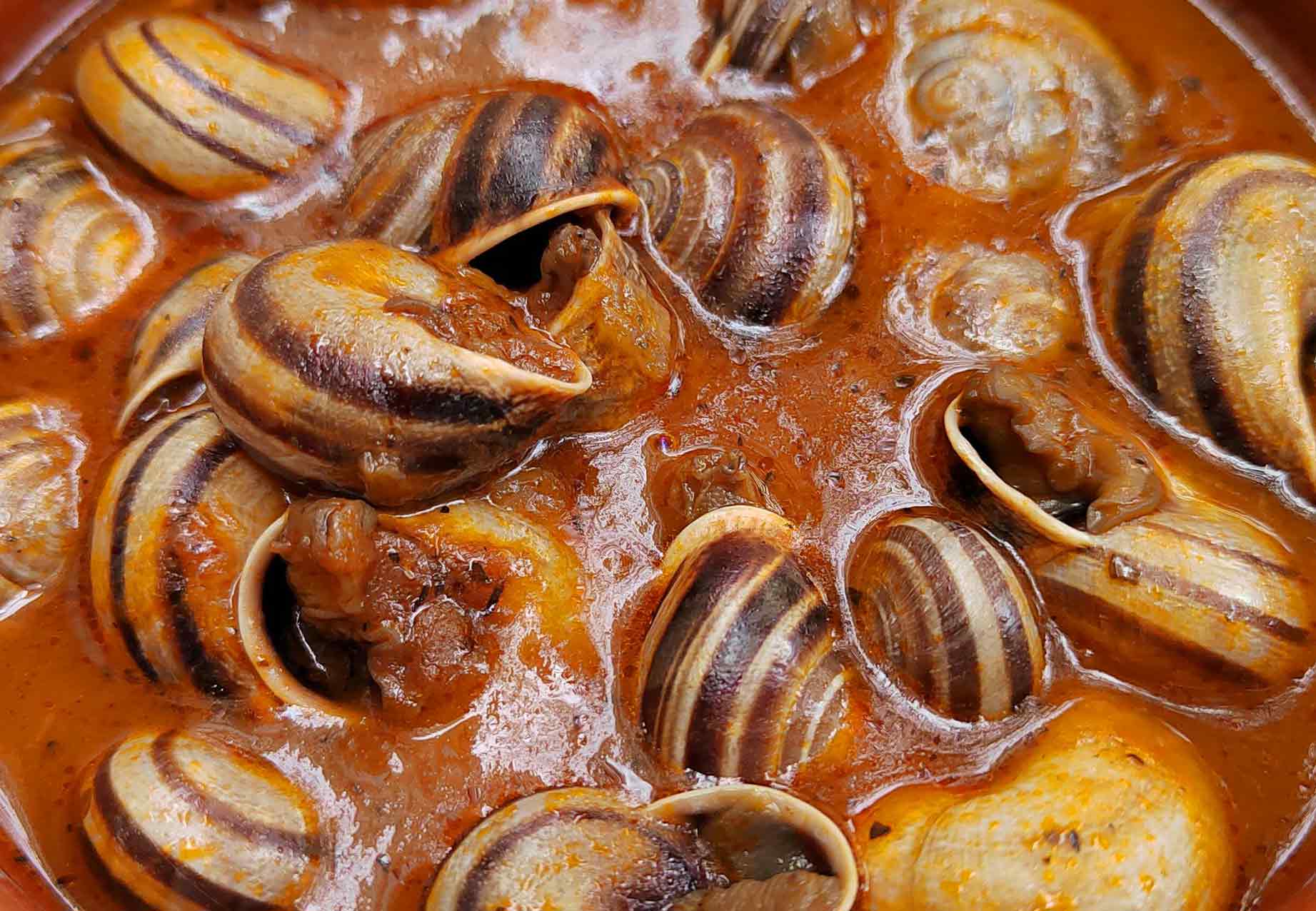
The range of restaurants in this town also stands out for its diversity. Here, the bars, restaurants and cafés are characterized by the variety of their gastronomic offerings. In the town you can taste the typical Mallorcan cuisine.
 Places of interest in Alarò
The emblematic Castell d’Alaró and the majestic Esglesia De Sant Bartomeu are two of the places you should not miss in this municipality of Mallorca, but you should also stroll through its cobbled streets, admiring the authentic architecture and enjoying the serenity of its natural landscapes.
Castell d’Alaró: is a historic castle in Mallorca, listed as a Site of Cultural Interest. Located on the top of Puig d’Alaró at an altitude of about 822 meters, it is one of the three rocky castles on the island, known for its difficult access and its great historical and natural value. It offers spectacular views of the Sierra de Tramontana and the Mediterranean Sea, and in its vicinity there is a guest house and an oratory.
Plaça de la Vila: This is the historic and social center of the municipality. The area stands out for its regionalist architecture with influences from Mallorcan civil Baroque, and for containing historical elements such as a fountain from 1742 and an old municipal coat of arms in the inner courtyard. Historically, the square is located where the former town hall stood, and its possible connection to the historical events of Cabrit i Bassa is being investigated.
Historic center: Stroll through its narrow, cobbled streets, which preserve the traditional stone architecture.
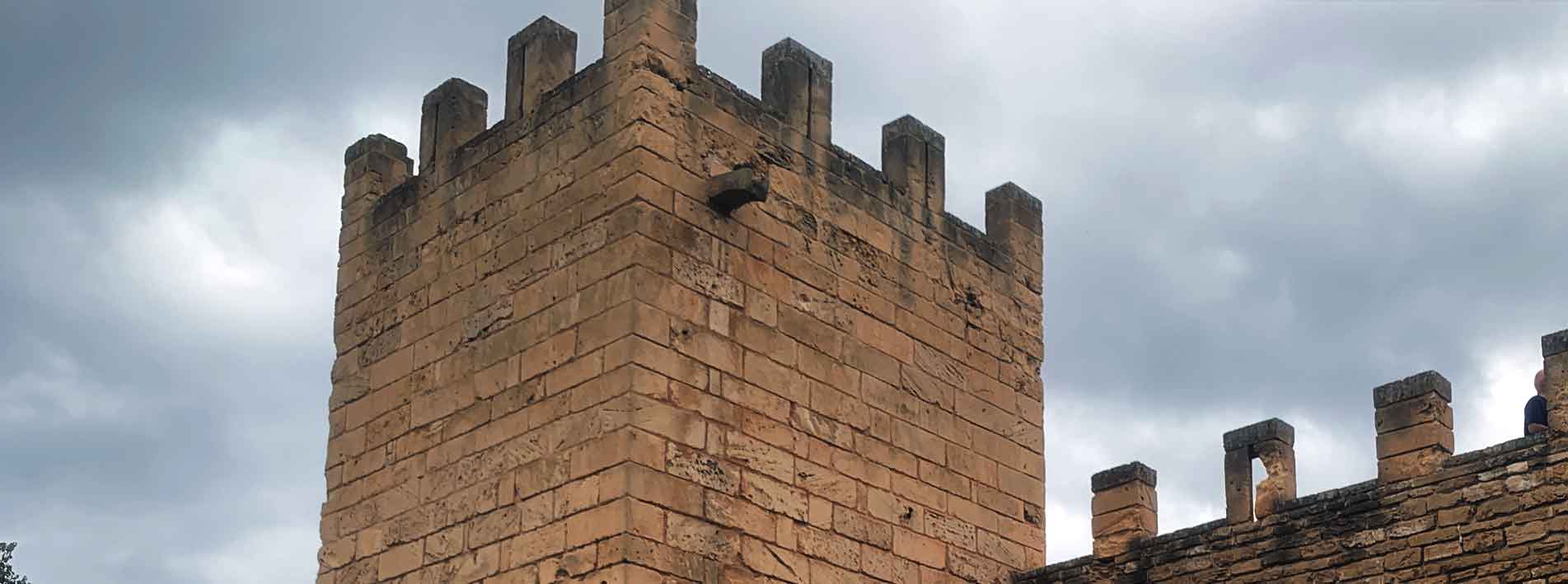
Old electricity factory tower: This is the only remnant of the first electricity factory in Mallorca, which was inaugurated in 1901. This building, constructed in the shape of an octagonal truncated pyramid, is an important architectural and industrial landmark. It was powered by a steam engine that supplied the entire village and marked a step forward in the modernization of the island. Declared a Site of Cultural Interest, it reminds us that Alaró was the first municipality on the island to have electricity.
Ses Artigues Spring: a historic water resource that has supplied the village for centuries, being used for mills, such as Son Tugores, and for agriculture, through an ancient canalization system or qanat. Currently, the town council has planned to channel the water to cover part of the urban supply and, although the qanat infrastructure has been renovated and improved, its origins date back to the 12th century.
Cruz d’en Coix: The Cruz d’en Coix is an iconic stone cross located in the town square, next to the church of Sant Bartomeu and the rectory, which has been declared a Site of Cultural Interest. It stands out for its rich symbolism and detailed sculptural decoration. Originally destroyed in a storm in 1884, it was restored in 1958 by the sculptor Francesc Salvà.
Església de Sant Bartomeu: the parish church of the village, next to the Plaça de la Vila, presides over the historic center and is one of the reference religious buildings of Alarò.
What to do in Alarò?
Discover the essence of Mallorca by enjoying the charming village of Alaró. Nestled at the foot of the imposing Sierra de Tramuntana mountains, this picturesque Mallorcan destination invites you to discover its rich history and centuries-old traditions.
Take a break and escape the tourist hustle and bustle to lose yourself in this peaceful setting, where every corner of the village has a story to tell.
Hiking and cycling: The natural environment, part of the Serra de Tramuntana, is ideal for these activities. In Alaró, there are several hiking and cycling routes, especially around Castell d’Alaró. Options include moderate to difficult mountain bike (MTB) trails, such as the one that climbs up to the castle, and shorter, easier road cycling routes, such as a 35 km route that reaches Inca. For hiking, there are multiple circular trails with panoramic views, ranging from moderate to more demanding hikes. Go hiking in Alaró with several mountain trails that involve different degrees of difficulty.
Guided winery tours: Enjoy guided tours by expert winemakers to the most prestigious wineries in the region. Immerse yourself in these sensory experiences and taste the authentic flavor of Mallorca.
Possession of Sollerich: Visit the possession of Sollerich. This is one of the largest properties in the Sierra de Tramuntana. “Alqueria Xular” was its name during the Muslim period. During the visit, you can enjoy the garden, the chapel, the oil mill and the olive pickers’ house, with tasting included.
Weekly market: Alaró’s weekly market is held every Saturday from 8:00 a.m. to 2:00 p.m. in and around the Plaça de la Vila. It offers a variety of products such as fruit, vegetables, handicrafts, textiles, shoes, and other items. The atmosphere is lively, with nearby bar and restaurant terraces where you can enjoy the surroundings. You can read more about the tradition of Alaró’s markets in the “Culture and traditions” section of this guide.
Patron saint festivities: These are held during the week leading up to August 16 in honor of San Roque, with activities such as the traditional dance of the Cossiers, recognized as a Festival of Cultural Interest. In the “Culture and traditions” section you will find the full details of the Sant Roc and Sant Pere festivities.
And that’s it for this brief overview of Alarò, Mallorca. We hope it helps.
By the way: Are you coming to Mallorca on a tourist trip? If you find it helpful, you can also check out our travel guide to Mallorca and more tourist information about the island