
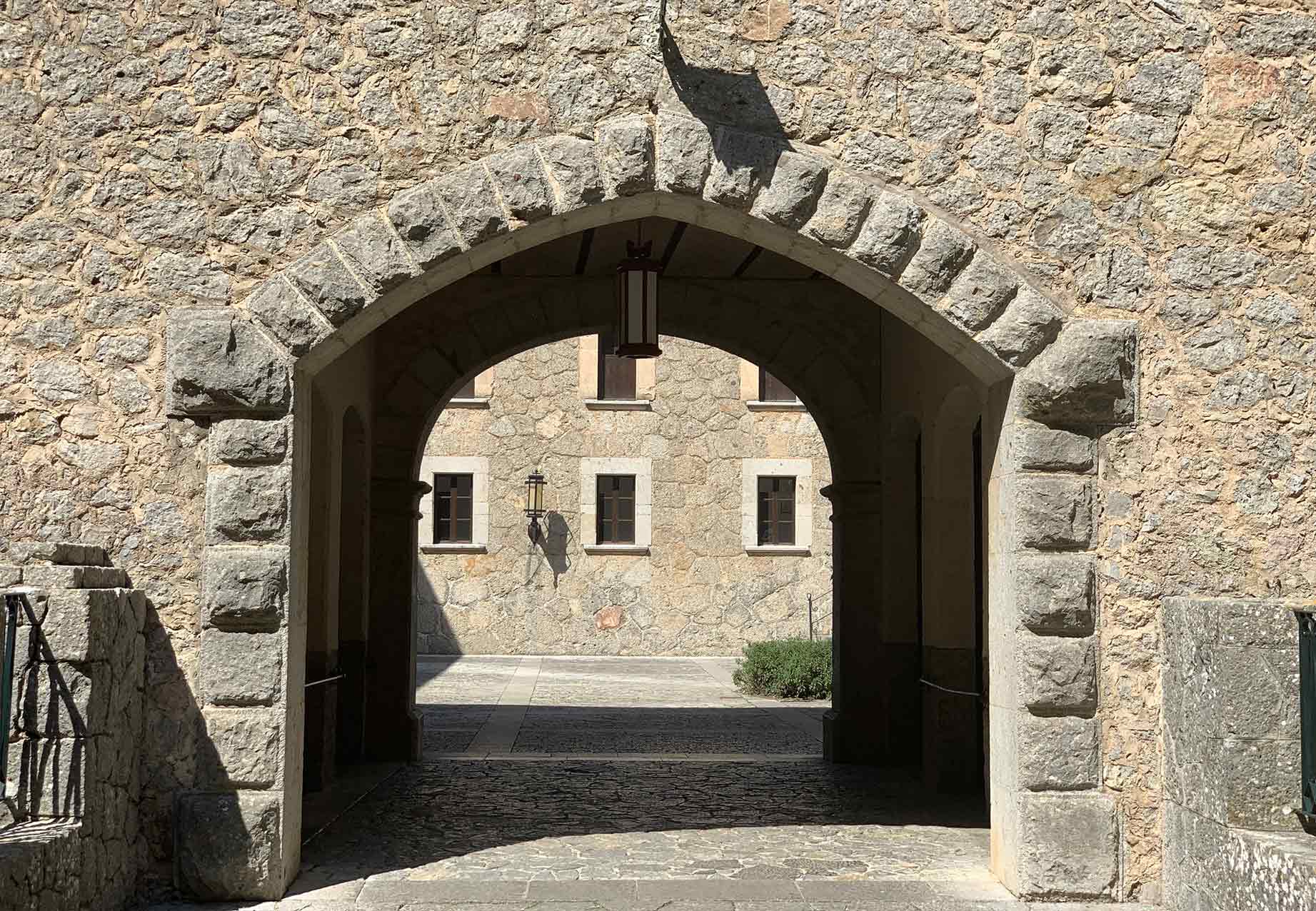
The Sanctuary of Lluc, or Monastery of Lluc (Sanctuary of Santa Maria de Lluc), is an important spiritual centre and place of pilgrimage in Mallorca…
Sanctuaries & Monasteries
The sanctuaries and monasteries of Mallorca are much more than religious monuments: they are havens of silence, privileged viewpoints and witnesses to centuries of history. Unlike the beaches and coastal villages, these enclaves invite you to slow down, to walk without hurry and to discover an island that is also explained through spirituality and tradition. This category brings together some of Mallorca’s most singular spaces, from large monastic complexes to small hermitages perched on mountainsides.
Sanctuaries and monasteries with history: faith, legend and heritage
Many of these places were born from a legend. The most repeated one is that of a statue of the Virgin found by a shepherd or a child, which disappeared again and again from wherever it was taken, until the locals understood that it had to stay where it was found. That story, with variations, lies behind several Marian sanctuaries on the island, and explains why many were built in remote spots, among rocks and holm oaks, far from urban centres.
Over time, those initial chapels grew into monastic complexes, some of them declared Sites of Cultural Interest. The architecture mixes styles: from the early Gothic to the Baroque of later reforms, with Neo-Gothic additions in more recent times. It is common to find single-nave churches, intimate cloisters, defence towers and rooms that once sheltered religious communities and today welcome visitors.
The monasteries with the best views in Mallorca
If there is one thing most of these enclaves share, it is their location. They sit on mountain tops, on promontories or in deep valleys, and almost always with panoramas that justify the visit on their own. From some you look over the Serra de Tramuntana, from others you can see entire bays, and there are viewpoints from which the silhouette of Cabrera or the north coast can be made out.
That altitude is no accident. Many were chosen for their strategic position, both for contemplative life and for watching over the territory. Today, that same height translates into natural viewpoints that allow you to understand the island’s geography at a single glance. Climbing up to them, whether by car along winding roads or on foot along signposted paths, is part of the experience.
Visiting monasteries in Mallorca: what to expect and how to make the most of it
Most of these spaces can be visited, although conditions vary. Some function as active sanctuaries, with regular worship and religious communities; others have been converted into guesthouses, restaurants or hostels, and a few retain a more austere character and are only partly open to visitors.
It is advisable to check before going, because opening hours change with the season and some spaces may close for renovations or religious celebrations. In many cases entry to the church is free, while access to museums, cloisters or specific areas may have a symbolic cost. Comfortable footwear is also recommended: although almost all can be reached by car, the ground is uneven and car parks are often some distance from the complex.
Staying in a monastery: a different way to experience Mallorca
One of the most particular experiences the island offers is sleeping in a former monastery. Several of these complexes have converted their cells into simple rooms, without luxuries, but with a silence and calm that are hard to find in a conventional hotel. Stays are usually basic, with shared bathrooms in some cases, and breakfast is served in rooms that retain the atmosphere of other times.
It is an option chosen by both pilgrims and travellers looking to disconnect. It is not for those expecting full hotel service, but it is for those who value tranquillity, the surroundings and the feeling of sleeping within walls that have stood for centuries. Some of these lodgings are in the heart of the Serra de Tramuntana, which allows you to combine the stay with hiking routes without needing a car.
Frequently asked questions about Mallorca’s sanctuaries and monasteries
Can you visit any monastery on the island?
Not all are open to the public in the same way. Some function as sanctuaries with free visits, others have restricted hours and a few are private. It is worth checking before travelling.
Is there an entrance fee?
In most, entry to the church is free. Museums, cloisters or specific exhibitions may have an entrance fee of a few euros. Parking may also be paid at some sites.
Are they suitable for children?
Yes, as long as the visit is adapted to the pace of the youngest. The grounds usually have open spaces and gardens, but some are in mountain areas with slopes and stairs.
Can you eat or stay in them?
Many have a café or restaurant, and several offer accommodation in simple rooms. It is advisable to book in advance, especially in high season and at weekends.
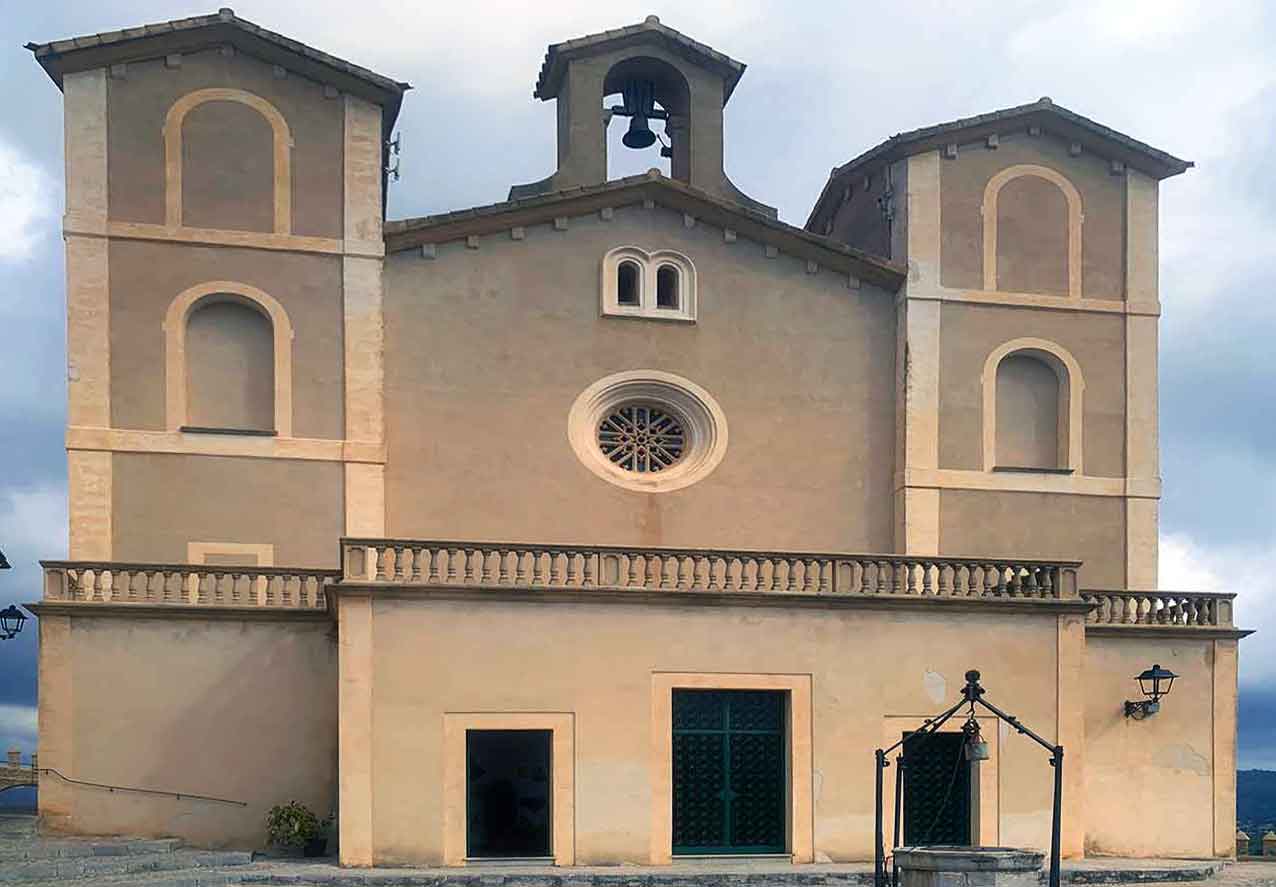
Sanctuary of Sant Salvador (Artá)
El Santuario de Sant Salvador es un complejo fortificado en Artà, Mallorca, situado en lo alto de una colina con vistas panorámicas de la ciudad y el mar…
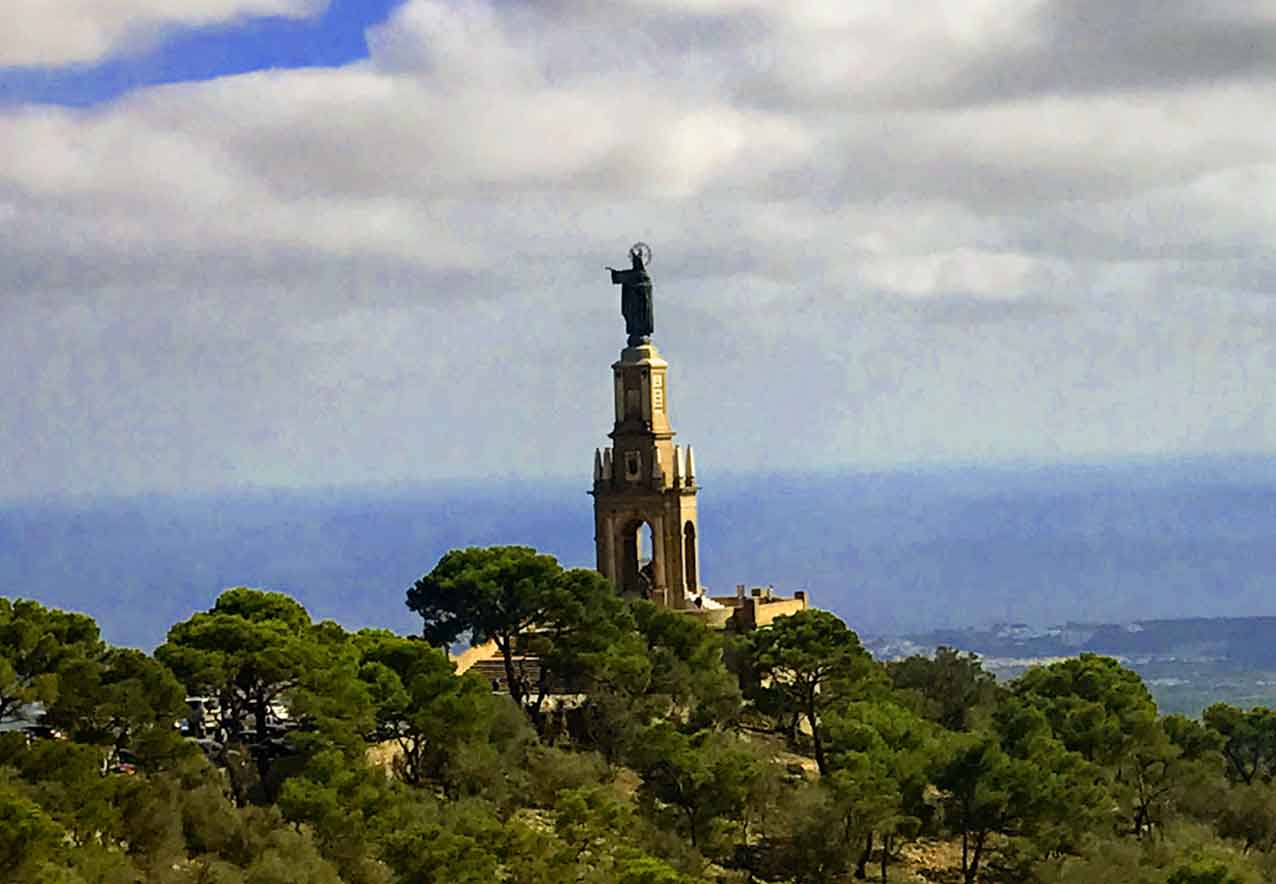
Sanctuary of Sant Salvador (Felanitx)
The Sanctuary of Sant Salvador, located on the summit of Puig de Sant Salvador in Felanitx, Mallorca, is a monastic complex of medieval origin…