
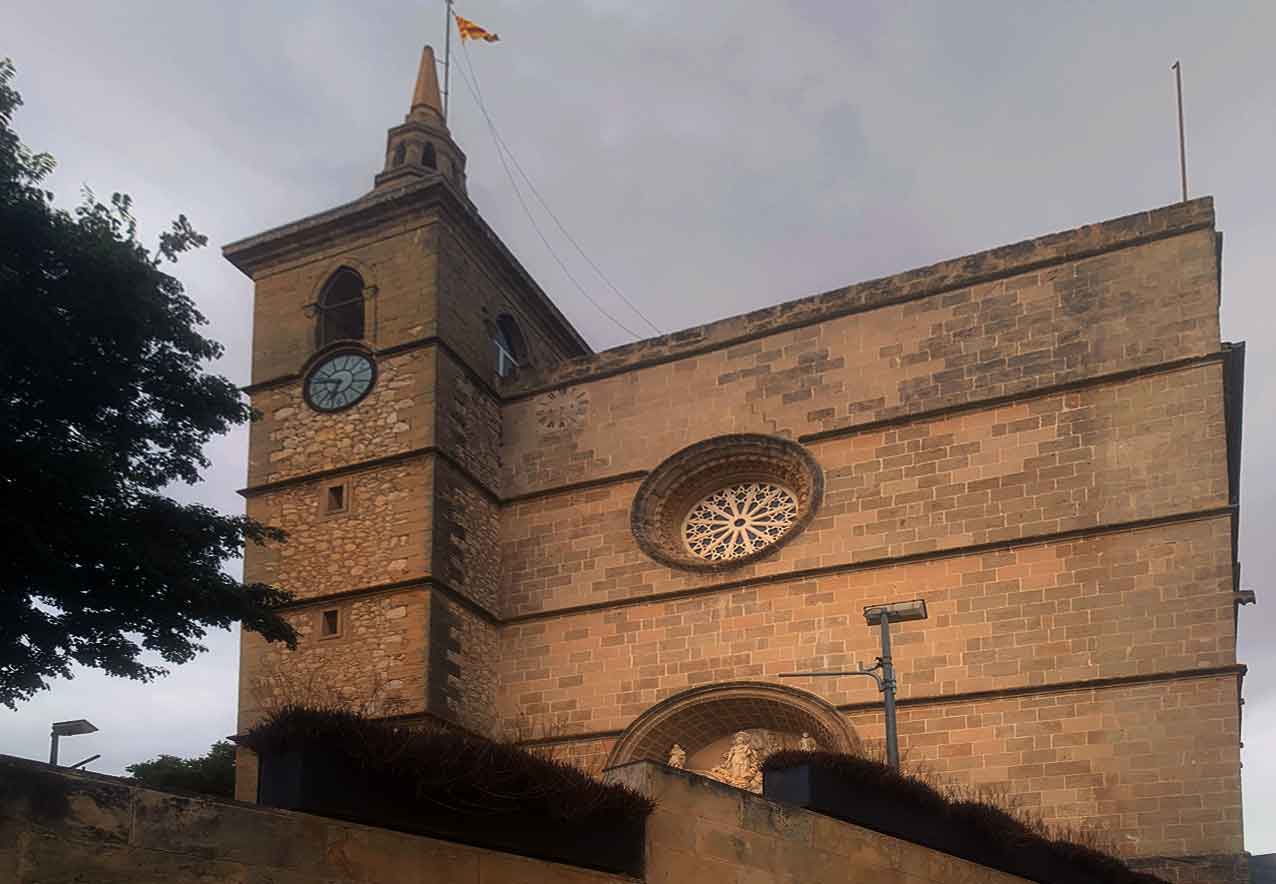
Church of Santa Margalida: The parish church of Santa Margalida is an important example of religious architecture in Mallorca (13th century)….
Churches and Cathedrals
The churches and cathedrals of Mallorca are one of the island’s richest and least known heritages. Beyond the beaches and coastal villages, visitors interested in religious architecture discover a journey that runs from Gothic to Baroque, from small rural chapels to great urban temples. This category brings together those spaces, with their history, their art and their role in the life of the island, for anyone wanting to discover Mallorca from another perspective.
Cathedrals and churches with history in Mallorca
Mallorca’s religious history can be read in its stones. After the conquest of the 13th century, the island underwent a process of temple construction that lasted for centuries, leaving an architectural heritage of the first order. The first churches were built on former mosques or on earlier buildings, and over time were enlarged and reformed, until styles and periods mixed within the same complex.
That process explains why many Mallorcan churches present simple façades that hide surprising interiors. Early Gothic coexists with Baroque additions, gilded altarpieces, side chapels and ribbed vaults. In the great urban temples, that accumulation of centuries translates into complex architecture, with wide naves, ambulatories and chapels that deserve an unhurried visit.
Religious art and architecture: from Gothic to Baroque
Mallorca’s religious heritage allows you to travel through several centuries of art in just a few kilometres. The Gothic, brought after the conquest, left churches with wide naves and ribbed vaults, with windows and rose windows that filter the light. The Baroque came later, with gilded altarpieces, plasterwork and more ornate decoration, which transformed the interior of many temples.
To this are added the contributions of Neo-Gothic and 19th-century eclecticism, and contemporary interventions that in some cases have coexisted with the original building. The result is a heterogeneous ensemble, in which goldwork, painting, sculpture and liturgical furniture coexist, and in which each temple has its own character.
Visiting churches and cathedrals in Mallorca: what to keep in mind
Most Mallorcan temples are open to the public, although conditions vary. Some function as active parishes, with worship schedules that condition the visit, and others have established tourist hours. In many cases entry is free, while in the great complexes there may be a symbolic fee that contributes to the maintenance of the building.
It is advisable to check before going, because opening hours change with the season and they may close for religious celebrations. It is also worth respecting the silence and the rules of each place, especially if worship is in progress. As for footwear and dress, although there are usually no strict restrictions, appropriate attire is appreciated in sacred spaces.
Rural churches and chapels: the simpler Mallorca
Alongside the great urban temples, the island preserves a set of rural churches, chapels and hermitages that reflect the everyday religiosity of centuries past. Many are in small inland settlements, on hilltops or beside old roads, and are usually small in size, with a single nave and a simple bell tower.
These spaces, less visited, offer a different experience: silence, natural surroundings and the feeling of standing before a heritage that has survived without major reforms. Some preserve frescoes, old altarpieces or goldwork pieces of great value, and others are a testimony to the lives of communities that no longer exist. For travellers interested in history and art, they are a must.
Frequently asked questions about Mallorca’s churches and cathedrals
Can you visit any church on the island?
Not all are open to the public in the same way. Some function as parishes with worship schedules, others have tourist hours and a few remain closed except for celebrations.
Is there an entrance fee?
In most parish churches entry is free. In the great cathedral complexes or in specific monuments there may be a fee of a few euros.
Can you take photos?
In many spaces yes, as long as no flash is used and worship is respected. In some specific places they may be restricted.
Are they suitable for children?
Yes, as long as the visit is adapted and silence is respected. Temples usually have wide spaces, but some have stairs and slopes.
Catalog Churches and Cathedrals in Mallorca:

La Seu: Palma de Mallorca Cathedral
The Cathedral-Basilica of Santa Maria in Palma is La Seu: Cathedral of Palma de Mallorca, the main religious building with Gothic architecture in the island…